Time-Sensitive Advocacy: Maximizing Your Impact by June 2026

What June 2026 Actually Represented for Federal Policy
June 2026 included substantial federal regulatory and policy activity, but it did not function as one nationwide deadline for Time-Sensitive Advocacy across all major social-policy areas.
Different agencies handled proposed rules, hearings, comment periods and regulatory reviews on separate schedules, with some proceedings ending in June and others continuing into July or later.
This distinction matters because effective advocacy begins with identifying the exact government action rather than organizing a campaign around a generalized national deadline that does not exist.
Why There Was No Single June 2026 Review Deadline
Federal agencies establish deadlines for individual rulemakings, notices and hearings according to the legal and administrative process governing each matter.
One federal proceeding, for example, may have required comments by June 12, while another hearing occurred on June 24 and allowed additional written submissions into July.
Advocates should therefore verify dates through official agency notices and regulatory dockets before describing any deadline as nationally applicable.
Why Accurate Deadlines Are Essential for Time-Sensitive Advocacy
A campaign becomes more effective when organizers know exactly which decision is pending, which institution has authority and when public participation is permitted.
Using an inaccurate date can direct supporters toward a closed process, waste organizational resources and undermine credibility with communities and policymakers.
Verified calendars allow advocates to separate active opportunities from decisions that have already moved into finalization, implementation, litigation or later stages of review.
Finding the Right Point for Public Participation
The appropriate intervention point depends on whether the issue involves a proposed regulation, congressional legislation, agency guidance, a public hearing or another governmental action.
Formal rulemakings may allow written comments, while legislation may require engagement with congressional committees, elected officials or public hearings instead.
Once the correct process is identified, advocates can focus their research, messaging and outreach on the people and procedures that actually influence the outcome.
Different Policy Areas Require Different Strategies
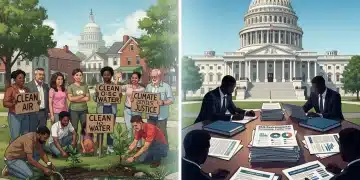
Issues involving social justice can involve federal agencies, Congress, state governments, courts and local authorities, depending on the policy being discussed.
Civil rights, environmental regulation and economic programs are not governed through one unified review process, so each issue must be tracked independently.
Organizations should therefore build separate policy calendars for each campaign rather than assuming that one federal deadline determines every Time-Sensitive Advocacy opportunity.
How to Separate Policy Issues Into Actionable Tracks
Advocates working on civil rights may need to monitor legislation, court decisions, federal regulations and state-level enforcement depending on the objective.
Environmental campaigns may instead require attention to agency rules, permitting decisions, environmental assessments and implementation guidance.
Economic-equity campaigns can involve housing, labor, lending, tax or appropriations policy, each of which follows a different legislative or regulatory pathway.
- Identify the exact policy or government action.
- Determine which institution controls the decision.
- Verify the official deadline or hearing date.
- Track what happens after the formal participation period closes.
What Advocates Can Do After a Deadline Passes
The end of a public-comment period does not necessarily mean that Time-Sensitive Advocacy opportunities have disappeared, although the available methods may change significantly.
An agency may still review comments, revise a proposal, publish a final rule, issue implementation guidance or open another proceeding related to the same subject.
Organizations can also continue educating communities, communicating with policymakers and preparing evidence for future legislative or regulatory opportunities.
Monitor the Next Official Government Action
After a formal comment period closes, agencies often need additional time to analyze submissions and determine whether the proposed policy should be modified.
Advocates should monitor agency websites, Federal Register publications and regulatory dockets instead of assuming that a closed comment period represents the end of the process.
Comparing the final action with the original proposal can also help organizations identify whether important concerns or recommendations were incorporated.
How to Build a Strong Time-Sensitive Advocacy Message
An effective Time-Sensitive Advocacy message identifies a specific problem, explains who is affected and proposes an action that the targeted decision-maker actually has authority to take.
General appeals can raise awareness, but formal policy engagement is usually stronger when recommendations respond directly to a proposal, bill or implementation decision.
This precision helps policymakers understand both the requested change and how it could realistically be incorporated into the policy process.
Use Evidence Without Exaggerating the Problem
Strong Time-Sensitive Advocacy can combine reliable data, legal analysis, community experiences and practical examples showing how a policy may affect people or organizations.
Statistics and factual claims should come from identifiable sources because overstated or unsupported claims can weaken an otherwise persuasive submission.
When evidence remains uncertain, advocates can acknowledge those limitations while requesting additional analysis, safeguards or data collection.
Coalitions Can Strengthen Time-Sensitive Advocacy Efforts
Coalitions allow organizations to combine expertise, community relationships, research capacity and communications resources around a shared policy objective.
A diverse coalition may also demonstrate that a recommendation is supported by several affected groups rather than representing the position of only one organization.
However, collaboration works best when participants agree on a specific outcome rather than assuming that broad agreement on an issue means agreement on every solution.
How to Build an Effective Coalition
Participating organizations should first define the specific policy result they want to achieve and identify where their interests overlap.
Responsibilities can then be divided according to expertise, with different partners handling research, community engagement, communications or policymaker outreach.
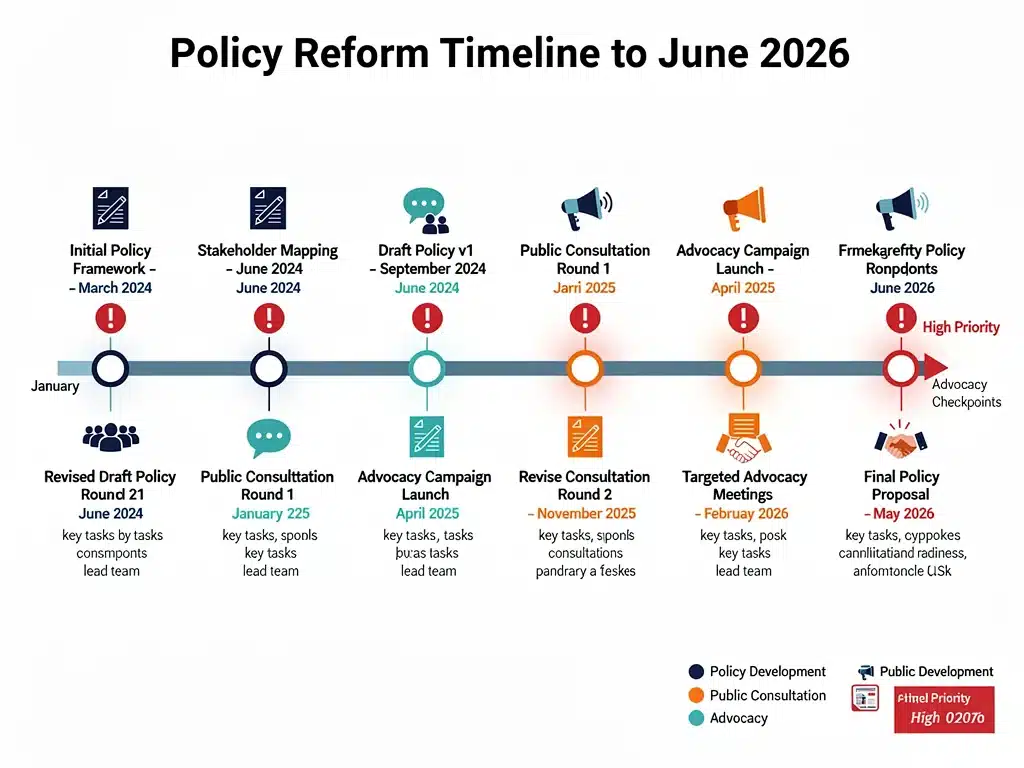
A shared timeline should track hearings, comment deadlines, expected decisions and implementation dates so coalition members remain coordinated.
- Define one clear policy objective.
- Assign responsibilities according to expertise.
- Agree on core evidence and messaging.
- Maintain a shared policy calendar.
Digital Advocacy Should Connect to a Real Policy Process
Digital platforms can distribute information rapidly, recruit supporters and direct people toward formal opportunities to participate in government decisions.
However, social-media engagement alone does not necessarily influence a regulatory proceeding if supporters are never connected to the relevant docket, hearing or policymaker.
Digital Time-Sensitive Advocacy is most useful when it clearly explains what decision is pending, who controls it and what legitimate action supporters can take.
Direct Policymaker Engagement Requires Specificity
Meetings, emails and constituent communications are more persuasive when they address a particular proposal instead of sending the same generic message to every public official.
Advocates should determine whether the appropriate target is Congress, a federal agency, a state regulator or another institution before organizing outreach.
The communication should then state the requested action clearly and support it with concise evidence that staff can review efficiently.
- Identify the correct institution before outreach.
- Reference the specific policy or proposal.
- State the requested action clearly.
- Provide evidence directly related to that request.
Grassroots Engagement Can Add Important Community Evidence
Grassroots movements can provide policymakers with direct information about how proposed policies may affect communities outside formal government institutions.
Personal experiences are particularly useful when they illustrate specific consequences and complement statistical, technical or legal evidence.
Organizations coordinating public participation should ensure that supporters understand the actual proposal so comments and testimony remain relevant to the decision being considered.
Public Education Should Explain How Policy Decisions Work
Educational materials should distinguish between proposed rules, final rules, bills, hearings and executive actions because each follows a different process.
Understanding those differences helps supporters recognize why submitting a regulatory comment may be useful in one situation while contacting an elected official may be more appropriate in another.
Accurate public education also prevents communities from being mobilized around deadlines or government actions that do not exist in the way they were described.

How to Track Current Regulatory Activity
The Federal Register is one of the principal official sources for proposed rules, final rules, notices and other agency actions that may create opportunities for public participation.
Regulatory dockets can provide supporting documents, comment submissions and procedural information that help advocates understand how a proposal is developing.
Congressional websites, committee pages and agency-specific resources may also be necessary when an issue involves legislation or administrative actions outside standard rulemaking.
Create an Advocacy Calendar Using Verified Dates
Every deadline in an Time-Sensitive Advocacy calendar should include an official source so organizers can separate confirmed dates from tentative expectations or outside commentary.
The calendar should also reserve time before submission deadlines for research, coalition review, community consultation and drafting rather than beginning work at the last moment.
After a deadline passes, organizers should continue tracking final actions, hearings, implementation dates and new opportunities for participation.
Monitoring Progress Helps Campaigns Adapt
Advocacy is an ongoing process, and organizations should monitor policy developments rather than assuming that the strategy established at the beginning of a campaign will remain effective.
Changes in proposed language, political priorities, agency schedules or implementation plans can create new risks and opportunities during the same policy debate.
Regular review allows organizations to redirect resources toward actions that remain relevant while discontinuing tactics that no longer address the current decision.
Measure Activity and Policy Outcomes Separately
Campaign activity can be measured through supporter participation, meetings, submissions, educational outreach and coalition involvement.
Policy outcomes should instead examine whether proposed language changed, recommendations appeared in final documents or implementation decisions moved in the desired direction.
Keeping these categories separate prevents organizations from treating high engagement alone as proof that a campaign directly changed government policy.
- Track formal comments and testimony.
- Record meetings with relevant officials.
- Monitor changes in proposed policy language.
- Review final rules or enacted legislation.
- Evaluate implementation after adoption.
Challenges Can Continue After Formal Review Periods
Time-Sensitive Advocacy campaigns can face opposition, limited resources, technical complexity and uncertainty even after a formal public-participation deadline has passed.
A final decision may introduce new implementation questions, while litigation, congressional oversight or additional agency action can change the policy environment again.
Organizations should therefore build strategies capable of continuing beyond one deadline instead of treating every campaign as a single short-term mobilization.
How to Sustain Engagement Beyond One Deadline
Research, testimony, coalition contacts and policy analysis developed during one campaign should be preserved for later implementation or regulatory discussions.
Maintaining relationships with community members and policy specialists also makes it easier to respond when a related proposal or legislative opportunity appears.
This long-term infrastructure can turn one Time-Sensitive Advocacy campaign into a continuing capacity to participate effectively in future policy decisions.
What June 2026 Teaches About Time-Sensitive Advocacy
The federal activity observed during June 2026 demonstrates that Time-Sensitive Advocacy works best when it is tied to specific government proceedings rather than one generalized national deadline.
Different agencies operated under different timelines, with some matters involving June deadlines while other proceedings continued into July, August or later. :contentReference[oaicite:1]{index=1}
The practical lesson is to verify every policy opportunity independently, use the appropriate participation channel and continue monitoring developments after each formal deadline closes.
| Key Point | 2026 Context |
|---|---|
| June 2026 | There was no verified single nationwide policy-review deadline covering all major social-policy issues. |
| Federal Processes | Agencies maintained separate rules, hearings and comment periods with individual timelines. |
| Strategic Advocacy | Identify the exact proceeding, decision-maker and official deadline before mobilizing supporters. |
| After Deadlines | Continue monitoring final rules, implementation, hearings and future opportunities for participation. |
Frequently Asked Questions About Time-Sensitive Advocacy
No. Federal agencies and Congress handled multiple separate regulatory and policy processes with their own deadlines rather than one nationwide June 2026 review.
Yes. Available channels may change, but organizations can monitor final rules, implementation, legislative oversight and future proceedings while continuing to provide information to policymakers and communities.
Official Federal Register notices, agency websites and regulatory dockets are important sources. Congressional and committee resources should also be checked when legislation is involved.
A useful submission addresses the actual proposal, provides relevant evidence, explains likely consequences and offers a specific recommendation that the responsible institution has authority to consider.
New rulemakings, hearings, legislative actions and implementation decisions continue throughout the year, so effective advocacy depends on monitoring current processes rather than one expired date.
What Happens Now
With June 2026 already behind us, the priority is no longer preparing for one supposed national review but identifying which actual policy proceedings remain active during the rest of the year.
Organizations should focus resources on verified rulemakings, hearings, legislative activity and implementation decisions while continuing to monitor issues that may reopen for public participation.
Time-Sensitive Advocacy remains effective when its urgency comes from a real government process, a confirmed deadline and a specific opportunity to influence a decision.