Supreme Court Rulings 2026: Impact on Social Justice
Advertisements
Three major U.S. Supreme Court decisions issued in 2026 are reshaping debates over citizenship, voting rights, and LGBTQ+ protections. This analysis examines Trump v. Barbara, Louisiana v. Callais, and Chiles v. Salazar, focusing on what the Court actually decided and how advocacy groups may respond.
Understanding these rulings is important for anyone following social justice, civil rights, voting access, immigration policy, or LGBTQ+ advocacy in the United States.
The decisions do not all move the law in the same direction: one protected birthright citizenship, another significantly narrowed voting-rights litigation, and another strengthened First Amendment protections for certain professional speech.
This analysis focuses on decisions from the Supreme Court’s October 2025 Term that were issued during 2026, rather than treating unrelated or older cases as new rulings.
The Shifting Landscape: Understanding Judicial Precedent
Supreme Court decisions bind lower courts on questions of federal law and constitutional interpretation, making each major ruling potentially influential far beyond the original dispute.
For civil-rights organizations, the practical effect often depends on the precise legal rule announced, how lower courts apply it, and whether legislatures respond with new laws.
Earlier decisions such as Students for Fair Admissions remain important background, but that affirmative-action ruling was issued in 2023, not 2026.
Ruling One: Birthright Citizenship Reaffirmed
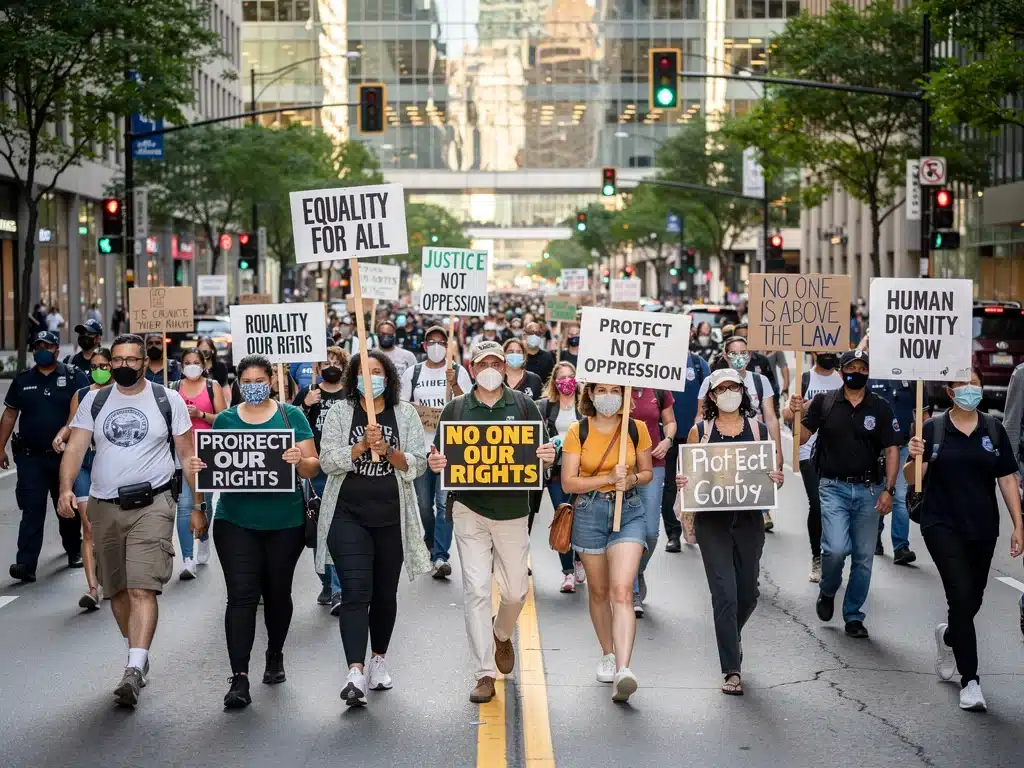
In Trump v. Barbara, decided June 30, 2026, the Court considered whether children born in the United States to parents unlawfully or temporarily present are citizens at birth.
The Court held that such children are “subject to the jurisdiction” of the United States and therefore receive citizenship under the Fourteenth Amendment’s Citizenship Clause.
The decision rejected the administration’s attempt to narrow birthright citizenship through executive action and preserved a longstanding constitutional rule with major consequences for immigrant families.
Impact on Citizenship and Equal Protection
The ruling protects citizenship at birth for children born on U.S. soil even when their parents lack lawful permanent status or are present temporarily.
For immigrant-rights organizations, the decision preserves a constitutional protection that affects legal status, access to citizenship rights, and long-term family stability.
It also illustrates that the Court’s 2026 civil-rights record was not uniformly restrictive, complicating broad claims that every major ruling moved in one ideological direction.
- Citizenship: Children covered by the ruling remain citizens at birth under the Fourteenth Amendment.
- Executive Power: The decision limits the President’s ability to redefine constitutional citizenship through an executive order.
- Advocacy: Immigration-rights groups retain a strong constitutional basis for defending birthright citizenship.
Ruling Two: Voting Rights and Electoral Representation
The most consequential 2026 voting-rights decision was Louisiana v. Callais, decided April 29 by a 6-3 Court.
The majority substantially revised how Section 2 of the Voting Rights Act applies to redistricting, emphasizing intentional racial discrimination rather than discriminatory effects alone.
The Court also modified the longstanding Gingles framework, making some vote-dilution challenges more difficult when race and partisan preference overlap.
Consequences for Democratic Participation
The decision raises the evidentiary burden in certain redistricting cases because plaintiffs must more clearly separate racial discrimination from ordinary partisan mapmaking.
Voting-rights organizations therefore face a more difficult path when arguing that district lines unlawfully dilute minority voting power under Section 2.
The ruling has already influenced other redistricting disputes and remains especially important ahead of the 2026 congressional elections and future map-drawing litigation.
Ruling Three: LGBTQ+ Rights and Professional Speech
The third major decision is Chiles v. Salazar, decided March 31, 2026, involving Colorado’s restrictions on conversion therapy for minors.
The Court held 8-1 that, as applied to licensed counselor Kaley Chiles’s talk therapy, Colorado’s law regulated speech based on viewpoint and required strict First Amendment scrutiny.
The ruling did not create a general religious exemption from all LGBTQ+ anti-discrimination laws, making the original article’s description of a “Masterpiece Cakeshop Revisited” decision inaccurate.
Balancing Rights and Freedoms
The case places stronger constitutional limits on how states regulate speech occurring within certain professional counseling relationships, even when the state characterizes the activity as treatment.
LGBTQ+ advocates argue that the ruling could make some state restrictions on conversion therapy harder to defend, while free-speech advocates view it as protection against viewpoint discrimination.
Future disputes will likely focus on where protected speech ends and permissible professional regulation begins, rather than on a broad license to disregard anti-discrimination requirements.
Strategic Responses from Social Justice Movements
These three decisions create very different strategic environments, requiring organizations to respond according to the specific legal doctrine involved rather than one national formula.
Immigration advocates gained strong constitutional precedent in Trump v. Barbara, while voting-rights groups face a narrower route under Section 2 after Callais.
LGBTQ+ advocates must now account for expanded First Amendment protections in professional-speech cases while continuing legislative and public-health advocacy at state level.
Adapting Advocacy Tactics
Litigation remains important, but advocacy groups may increasingly combine court challenges with legislation, voter education, public communication, and local organizing.
State constitutions can also provide protections independent of federal doctrine, making state courts and legislatures increasingly important in some civil-rights disputes.
Organizations must also select cases carefully because broad claims can produce national precedent that affects future litigation far beyond one state or individual plaintiff.
- Grassroots Mobilization: Community outreach and voter education remain important outside the courtroom.
- State-Level Advocacy: State constitutions and legislatures can provide additional legal or policy avenues.
- Strategic Litigation: Future cases will need to account carefully for the new Supreme Court standards.
The Role of Public Opinion and Political Will
Supreme Court decisions establish legal rules, but public policy can continue evolving through elections, legislation, administrative action, and state constitutional processes.
That distinction is especially important because Congress can sometimes revise statutes after judicial interpretation, although it cannot simply override a constitutional holding by ordinary legislation.
Current debates over civil-rights legislation therefore remain relevant even when the Supreme Court has resolved one particular legal question.
Shaping the Narrative
Advocacy organizations frequently explain Supreme Court rulings to supporters through competing narratives about equality, federalism, free speech, electoral fairness, or constitutional limits.
Those narratives can influence fundraising, voter engagement, candidate priorities, and legislative proposals, but their political effects should not be presented as predetermined.
A legally accurate description of the ruling is especially important because exaggerating what the Court decided can obscure which rights remain protected and which issues remain unresolved.
Looking Ahead: Long-Term Implications and Future Battles
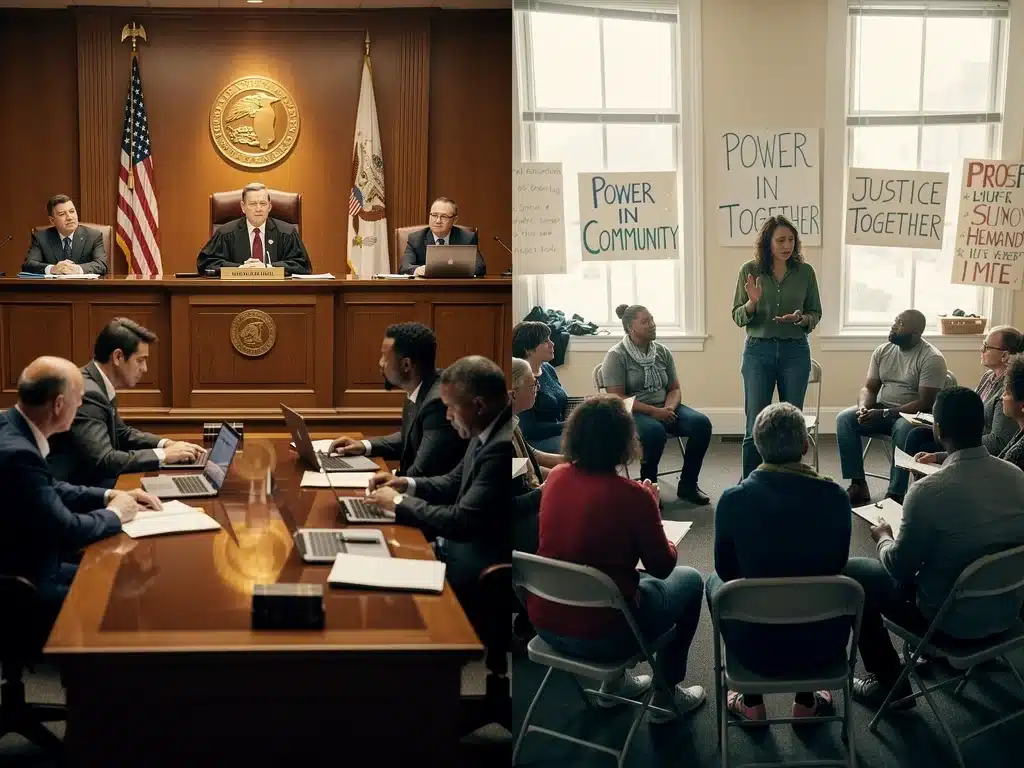
The long-term impact of these rulings will depend partly on how lower courts apply their reasoning to new disputes involving citizenship, districting, and regulation of professional speech.
Louisiana v. Callais is particularly likely to shape ongoing voting litigation because its revised Section 2 framework directly changes how certain claims must be proven.
Chiles may generate litigation over comparable speech restrictions, while Trump v. Barbara provides unusually clear constitutional protection for birthright citizenship.
Anticipating Future Legal and Social Shifts
Voting-rights litigants will closely examine whether evidence can establish intentional racial discrimination under the standards articulated in Callais.
States regulating counseling and other professional speech will need to consider whether their laws distinguish between viewpoints in ways that trigger strict First Amendment scrutiny.
Meanwhile, citizenship advocates now possess a direct 2026 Supreme Court holding rejecting efforts to exclude U.S.-born children based on their parents’ immigration status.
| Key Ruling | Primary Impact |
|---|---|
| Birthright Citizenship | Trump v. Barbara reaffirmed citizenship for covered children born in the United States. |
| Voting Rights | Louisiana v. Callais narrowed the framework for certain Section 2 redistricting claims. |
| LGBTQ+ and Speech | Chiles v. Salazar required strict scrutiny for Colorado’s viewpoint-based regulation of talk therapy. |
| Social Justice Movements | The rulings create different opportunities and constraints across advocacy areas. |
Frequently Asked Questions About Supreme Court Rulings and Social Justice
The effects differ. Trump v. Barbara protects citizenship for affected U.S.-born children, Callais makes some minority vote-dilution claims harder, and Chiles changes how states may regulate certain counseling speech involving LGBTQ+ minors.
Responses include litigation, voter education, state-level advocacy, public communication, and analysis of how lower courts apply the new standards. Strategies differ significantly across voting, immigration, and LGBTQ+ organizations.
Congress can amend federal statutes within constitutional limits, but ordinary legislation cannot simply reverse the Supreme Court’s interpretation of the Constitution. A constitutional amendment can alter constitutional rules through the Article V process.
Callais has direct relevance to redistricting and minority voting representation. The broader electoral effects of all three decisions depend on subsequent litigation, political campaigns, voter priorities, and state actions.
No single legal trajectory is guaranteed. The 2026 decisions show simultaneous expansion and restriction of different rights, making future advocacy dependent on courts, legislation, elections, organizing, and state-level protections.
Impact and Implications
The Supreme Court‘s 2026 decisions do not support a simple narrative of uniform expansion or contraction of civil rights across every issue.
Trump v. Barbara preserved a broad citizenship guarantee, while Louisiana v. Callais substantially narrowed one important avenue for voting-rights litigation.
Chiles v. Salazar strengthened First Amendment protections in a sensitive professional-speech context, creating new questions for LGBTQ+ advocacy and state regulation.