Free Speech in 2026: Navigating Online Legal Battles
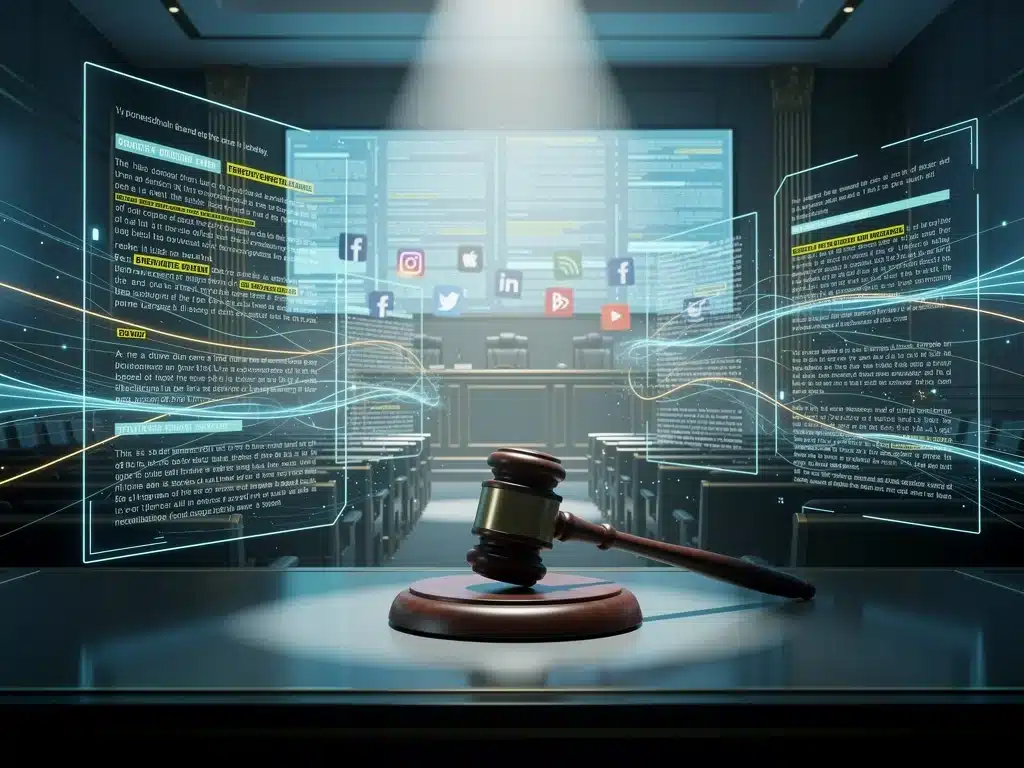
Free Speech remains a major U.S. legal issue in 2026, with the Supreme Court reinforcing that regulations targeting expressive content can trigger First Amendment scrutiny. Recent decisions have addressed professional speech, charitable solicitation, and political spending.
Online expression is another focus, as the Justice Department has settled lawsuits alleging improper federal pressure on social media platforms. The developments highlight continuing disputes over when government communication becomes unconstitutional coercion.
Readers should monitor new Supreme Court rulings, campus and protest disputes, and government interactions with digital platforms. The First Amendment generally restricts government censorship, while private employers and platforms retain broader authority to set their own speech rules.
The Evolving Landscape of Online Free Speech
The digital realm continues to redefine the boundaries of expression, bringing forth unprecedented legal and ethical dilemmas. As technology advances, so do the complexities surrounding what constitutes free speech online and how it should be regulated.
In 2026, the discussion around online speech legal battles is more critical than ever, with new court rulings and legislative proposals emerging regularly. Understanding these shifts is essential for individuals, content creators, and the platforms themselves.
The core challenge lies in balancing the fundamental right to free expression with the imperative to prevent harm, misinformation, and illegal activities. This delicate equilibrium forms the bedrock of current legal debates.
Content Moderation: The First Legal Battleground
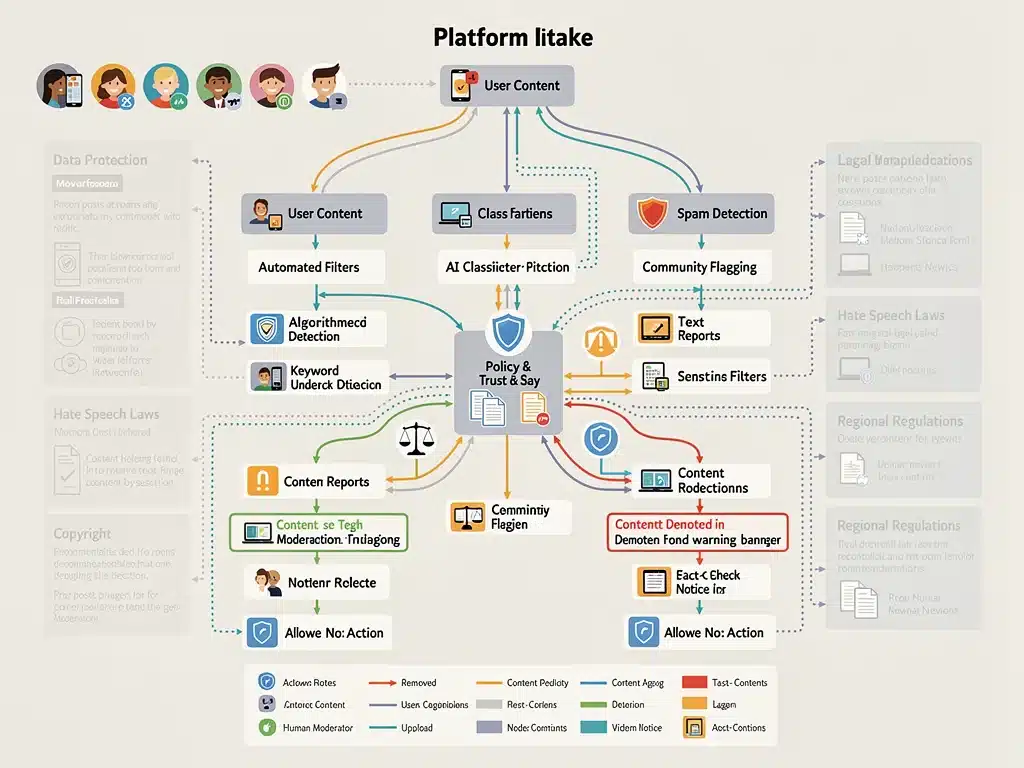
Content moderation stands as the most immediate and visible front in the ongoing online speech legal battles. Platforms grapple with immense volumes of user-generated content, requiring them to make rapid decisions about what stays and what goes.
The legal framework surrounding moderation is often a patchwork of platform policies, national laws, and international norms, leading to significant inconsistencies. This environment creates friction between users who feel censored and those advocating for stricter controls on harmful content.
Recent legislative efforts in various countries aim to impose greater accountability on platforms for their moderation practices. These initiatives often spark intense debate over who should define acceptable speech and the potential for over-censorship.
Defining Harmful Content
One of the persistent challenges in content moderation is the subjective nature of what constitutes ‘harmful’ content. While some categories like child exploitation material or incitement to violence are universally condemned, others, such as hate speech or misinformation, are subject to diverse interpretations.
Governments and civil society organizations often push for broader definitions of harmful content, while free speech advocates warn against definitions that could stifle legitimate expression. This tension is central to many ongoing online speech legal battles.
Platforms are increasingly employing AI and automated tools to identify and remove problematic content, but human oversight remains crucial. The accuracy and bias of these algorithms are also becoming significant points of legal contention.
- Platforms face pressure from governments to remove content deemed illegal or harmful.
- Users frequently challenge moderation decisions, citing free speech infringements.
- The definition of ‘harmful’ content varies widely across jurisdictions and cultures.
Transparency and Due Process in Moderation
Calls for greater transparency in content moderation processes are intensifying. Users and advocacy groups demand clear guidelines, appeal mechanisms, and data on moderation actions to ensure fairness and accountability.
Legal challenges frequently arise from users claiming their content was unfairly removed without adequate explanation or opportunity to appeal. These cases highlight the need for platforms to establish robust due process mechanisms.
Regulatory proposals, such as the Digital Services Act in the EU, aim to mandate greater transparency and provide users with more avenues for recourse. Similar discussions are shaping the narrative around online speech legal battles in the United States.
Platform Liability: The Second Legal Battleground
The question of platform liability for user-generated content is another cornerstone of current online speech legal battles. Historically, laws like Section 230 of the Communications Decency Act in the U.S. have largely shielded platforms from liability for content posted by their users.
However, this protection is increasingly under scrutiny, with critics arguing that it allows platforms to evade responsibility for the spread of harmful or illegal material. There’s a growing movement to reform or reinterpret these laws.
The debate centers on whether platforms should be treated as neutral conduits of information or as publishers with editorial responsibilities. The outcome of these discussions will profoundly impact how platforms operate and manage content.
Section 230 and its Challengers
Section 230 states that “no provider or user of an interactive computer service shall be treated as the publisher or speaker of any information provided by another information content provider.” This has been a foundational element of the internet as we know it.
However, in 2026, numerous legislative proposals and court cases are challenging its broad protections. Arguments range from advocating for its complete repeal to suggesting modifications that would hold platforms more accountable for specific types of content, particularly those recommended by algorithms.
The implications of altering Section 230 are vast, potentially leading to platforms adopting more restrictive moderation policies or facing an onslaught of lawsuits. This makes it a central point in any discussion about online speech legal battles.
- Section 230 protects platforms from liability for user-generated content.
- Critics argue it enables the spread of harmful content without consequence.
- Proposed reforms seek to modify or repeal Section 230, with significant implications.
Liability for Algorithmic Amplification
A new frontier in platform liability involves the role of algorithms in amplifying certain content. Critics argue that when platforms actively promote content, especially harmful content, through their recommendation engines, they move beyond being neutral hosts to active participants.
Legal theories are emerging that suggest platforms should be held liable for the harms caused by content that their algorithms intentionally amplify, even if the content was originally user-generated. This is a complex area with few precedents.
The outcome of these cases could force platforms to redesign their algorithms to prioritize safety over engagement, fundamentally changing the user experience. This is a crucial aspect of understanding the future of online speech legal battles.
International Jurisdiction: The Third Legal Battleground
The internet’s global nature means that content posted in one country can be accessed anywhere, creating significant challenges for national laws and enforcement. This leads to complex international jurisdiction issues, forming the third major battleground.
Different countries have varying standards for free speech and acceptable content, leading to conflicts when platforms operate across borders. What is legal in one nation might be illegal in another, forcing platforms to navigate a complex legal maze.
This jurisdictional ambiguity can result in platforms being pressured to remove content globally based on local laws, or conversely, being unable to enforce local laws against foreign-posted content. It’s a constant source of online speech legal battles.
Cross-Border Enforcement Challenges
Enforcing national laws on global platforms presents immense difficulties. A court order in one country may have little to no legal standing in another, leading to a fragmented regulatory environment.
Platforms often face conflicting demands from different governments, putting them in a precarious position. Compliance with one nation’s laws might mean violating another’s, particularly concerning data privacy and freedom of expression.
Efforts are underway to develop international agreements or frameworks to address these cross-border challenges, but progress is slow and often met with resistance due to differing national interests and values. These efforts are central to mitigating future online speech legal battles.
The ‘Global Gag Order’ Debate
The concept of a ‘global gag order’ refers to situations where a court order from one country compels a platform to remove content worldwide. This practice is highly controversial, as it effectively exports one nation’s legal standards to the entire globe.
Free speech advocates argue that such orders undermine the principles of free expression by allowing the most restrictive national laws to dictate global content standards. Platforms, caught in the middle, often struggle with how to respond.
This debate highlights the fundamental tension between national sovereignty and the borderless nature of the internet, making it a critical area of focus in Free Speech.
The Role of International Human Rights Law
International human rights instruments, such as the Universal Declaration of Human Rights and the International Covenant on Civil and Political Rights, provide a framework for understanding free speech at a global level. These documents often serve as a benchmark in discussions about online content.
While these instruments affirm the right to freedom of expression, they also acknowledge that this right is not absolute and can be subject to certain restrictions. These restrictions typically relate to protecting national security, public order, public health, or morals, and the rights and freedoms of others.
Attorneys and advocates frequently invoke international human rights law in online speech legal battles, arguing for consistent application of these principles across different jurisdictions and platforms. This provides a crucial ethical and legal foundation.
Balancing Rights and Responsibilities
The core challenge remains balancing the right to free expression with the responsibility to prevent harm. International law often emphasizes that any restrictions on free speech must be necessary and proportionate to the aim pursued.
This principle is particularly difficult to apply in the fast-paced, high-volume environment of online platforms. Determining necessity and proportionality for every piece of content is an immense task, often leading to imperfect outcomes.
The ongoing dialogue between states, international organizations, and civil society aims to develop clearer guidelines and best practices for platforms. This collaborative effort is vital for Free Speech effectively.
Emerging Technologies and Future Challenges
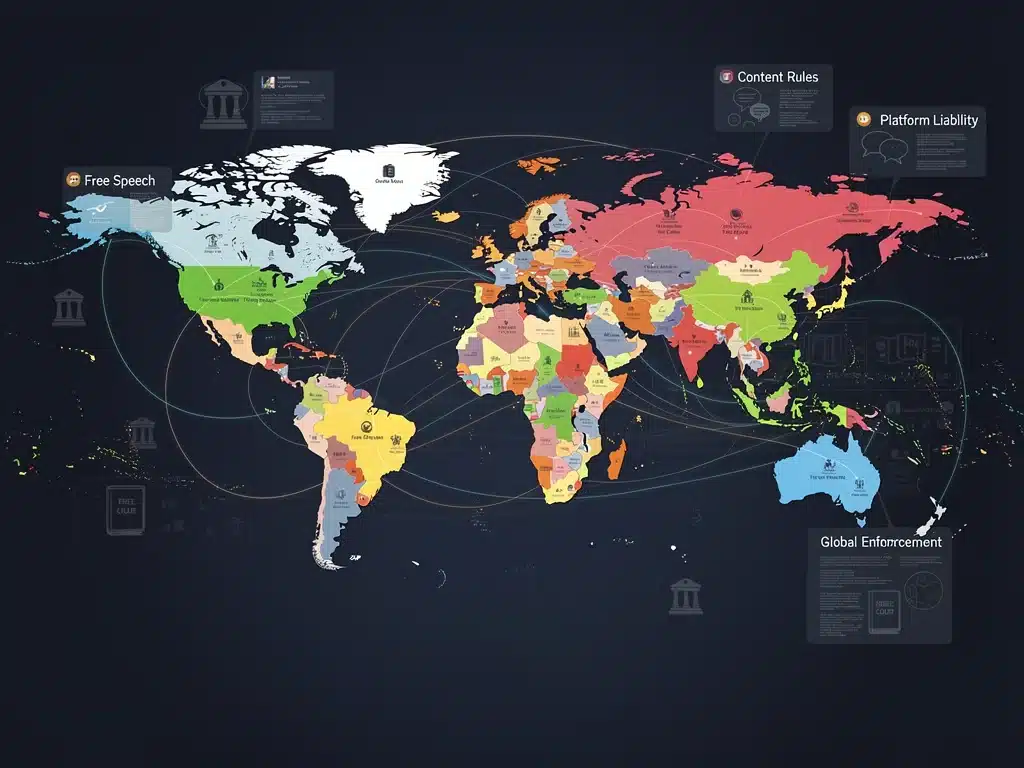
New technologies are constantly emerging, introducing fresh complexities to the free speech debate. Virtual reality, augmented reality, and decentralized social networks present unique challenges for content moderation and liability.
The immersive nature of virtual environments raises questions about what constitutes ‘speech’ and ‘harm’ in these spaces. Traditional legal frameworks may not adequately address the nuances of these new forms of interaction.
Decentralized platforms, often built on blockchain technology, aim to reduce central control, which could complicate moderation and enforcement efforts. These innovations will undoubtedly shape future online speech legal battles.
AI and Deepfakes in Online Discourse
The rise of advanced AI, particularly in generating deepfakes and sophisticated misinformation, poses a significant threat to the integrity of online discourse. These technologies can create highly convincing but entirely fabricated content, making it difficult for users to discern truth from falsehood.
Legal systems are struggling to keep pace with these developments, with ongoing debates about how to regulate the creation and dissemination of AI-generated harmful content. The potential for widespread abuse is a major concern.
Platforms face the immense challenge of detecting and mitigating the impact of deepfakes and AI-driven disinformation campaigns. This technological arms race will be a defining feature of Free Speech.
| Key Battleground | Brief Description |
|---|---|
| Content Moderation | Platforms’ decisions on what content to allow or remove, facing legal challenges over censorship and harmful material. |
| Platform Liability | Legal accountability of platforms for user-generated content, particularly regarding Section 230 and algorithmic amplification. |
| International Jurisdiction | Conflicts arising from differing national free speech laws and the global reach of online content, leading to cross-border enforcement issues. |
| Emerging Technologies | New challenges posed by VR, AR, decentralized platforms, AI, and deepfakes to existing legal frameworks for online speech. |
Frequently Asked Questions About Online Free Speech
The primary challenge in content moderation is balancing free expression with the need to prevent harm and illegal content. Platforms face immense pressure from governments and users to define and enforce acceptable speech, often leading to disputes over censorship and fairness in online speech legal battles.
Section 230 traditionally grants internet platforms immunity from liability for user-generated content. This protection is crucial for the internet’s open nature but is increasingly challenged as platforms’ roles in content amplification grow, impacting ongoing online speech legal battles.
International jurisdiction is critical because online content transcends national borders, leading to conflicts between different countries’ laws on free speech. Platforms struggle to comply with varied legal standards, creating complex challenges in Free Speech.
Algorithms are central to free speech debates due to their role in amplifying content, including misinformation and harmful material. There’s a growing legal argument that platforms should be held accountable for the harms caused by algorithmically boosted content, intensifying online speech legal battles.
New technologies like deepfakes are creating convincing fake content, blurring the lines between truth and falsehood. This poses significant challenges for content moderation, legal accountability, and the integrity of online discourse, becoming a key factor in future online speech legal battles.
What This Means
The evolving landscape of online speech legal battles indicates a future where platforms will face increased scrutiny and legal pressure.
Understanding these three battlegrounds, content moderation, platform liability, and international jurisdiction, is paramount for anyone involved in digital communication.
Stakeholders must prepare for dynamic regulatory changes and continued legal challenges as society grapples with defining free expression in the digital age, profoundly impacting Free Speech.