The Financial Impact of Social Justice: Analyzing 3 Major Policy Shifts by Mid-2026

Modern corporate strategy is no longer just about the bottom line; it is about accountability. Understanding the Financial Impact of Social Justice has become essential for executives as equity-driven initiatives reshape corporate balance sheets.
Organizations failing to adapt to this shifting economic landscape risk both regulatory penalties and severe capital loss.
Major regulatory bodies and macroeconomic frameworks are shifting toward measurable, human-centric metrics. From climate equity mandates to structural labor reforms, systemic fairness is being hardcoded directly into corporate fiscal policies.
Keeping up with these socio-economic transformations is crucial for maintaining market value and investor confidence.
This analysis breaks down three critical policy movements set to redefine corporate spending and asset allocation by mid-2026. Discover how these structural equity requirements will alter investment landscapes and how forward-thinking leaders can turn compliance into a fiscal advantage.
Understanding the Evolving Landscape of Social Justice and Finance
The intersection of social justice initiatives and economic outcomes has become a critical area of focus for policymakers and businesses alike. As the United States moves towards mid-2026, several significant policy shifts are poised to redefine this relationship, bringing both opportunities and challenges.
These changes are not merely ideological; they carry tangible financial implications that will resonate across various sectors, from labor markets to consumer spending and corporate governance. Understanding these dynamics is crucial for anticipating future economic trends.
Our analysis delves into three major policy shifts, examining their potential to reshape the financial landscape and influence the broader social fabric of the nation. The goal is to provide a clear, objective overview of what is currently unfolding and what lies ahead.
Policy Shift 1: Expanding Access to Affordable Healthcare and its Economic Ripple Effects
One of the most significant policy shifts involves expanding access to affordable healthcare, an initiative with profound economic ramifications. This move aims to reduce healthcare disparities, particularly for underserved communities, by increasing coverage and lowering out-of-pocket costs.
The financial impact of social justice in this area is multi-faceted. Improved health outcomes can lead to a more productive workforce, reduced absenteeism, and a decrease in medical debt, which often cripples household finances and contributes to economic instability.
Businesses may see changes in insurance premiums and employee retention, while the pharmaceutical and healthcare industries could experience shifts in demand and regulatory pressures.
The long-term economic benefits, including a healthier population and reduced public health crises, are substantial.
The Economic Benefits of Universal Healthcare Access
- Increased workforce productivity due to improved health.
- Reduced personal bankruptcy rates linked to medical expenses.
- Lower public health costs from preventative care and early intervention.
- Enhanced economic stability for vulnerable communities.
The debate around healthcare expansion often centers on funding mechanisms and potential tax implications. However, proponents argue that the societal gains, both human and economic, far outweigh the costs, creating a more robust and equitable economy.
Policy Shift 2: Reforming Criminal Justice and its Impact on Labor Markets
Criminal justice reform represents another major policy shift with significant financial implications, especially concerning labor market integration and community development.
Initiatives focused on reducing recidivism, expunging records, and fair chance hiring practices aim to dismantle barriers to employment for formerly incarcerated individuals.
The financial impact of social justice in this context is direct and measurable. By allowing more individuals to rejoin the workforce, these reforms can boost labor supply, increase tax revenues, and reduce reliance on social welfare programs.
Companies gain access to a broader talent pool, potentially mitigating labor shortages.
Furthermore, communities impacted by high incarceration rates often suffer from economic disinvestment. Reforms can foster local economic revitalization, attracting new businesses and increasing consumer spending, thereby strengthening the overall economic fabric.
Reintegration and Economic Empowerment
- Increased employment rates for formerly incarcerated individuals.
- Reduced social welfare expenditure and increased tax contributions.
- Stimulation of local economies in historically disadvantaged areas.
- Improved corporate diversity and inclusion metrics.
These reforms challenge traditional views on crime and punishment, advocating for rehabilitation and economic opportunity as pathways to a safer and more prosperous society. The long-term economic benefits extend to reduced crime rates and stronger community bonds.
Policy Shift 3: Investing in Green Infrastructure and Environmental Justice Initiatives
The third major policy shift centers on substantial investments in green infrastructure and environmental justice initiatives.
This involves directing resources towards communities disproportionately affected by pollution and climate change, while simultaneously creating new economic opportunities in sustainable sectors.
The financial impact of social justice in this area is twofold: it addresses historical inequities while driving innovation and job creation.
Investments in renewable energy, sustainable transportation, and clean water systems generate employment, stimulate local economies, and reduce public health costs associated with environmental degradation.
For businesses, this shift presents opportunities in green technologies, sustainable manufacturing, and eco-friendly services. Simultaneously, it necessitates compliance with new environmental regulations and a potential re-evaluation of supply chains to meet sustainability standards.
The Dual Benefits of Environmental Justice Investments
- Creation of new jobs in renewable energy and green technologies.
- Reduction in healthcare costs due to improved environmental quality.
- Stimulation of local economies through infrastructure projects.
- Enhanced corporate responsibility and sustainable business practices.
These policies underscore a commitment to a just transition, ensuring that the benefits of a green economy are shared broadly, and that the burdens of environmental harm are alleviated for all communities. The financial impact of social justice here is about building a resilient and equitable future.
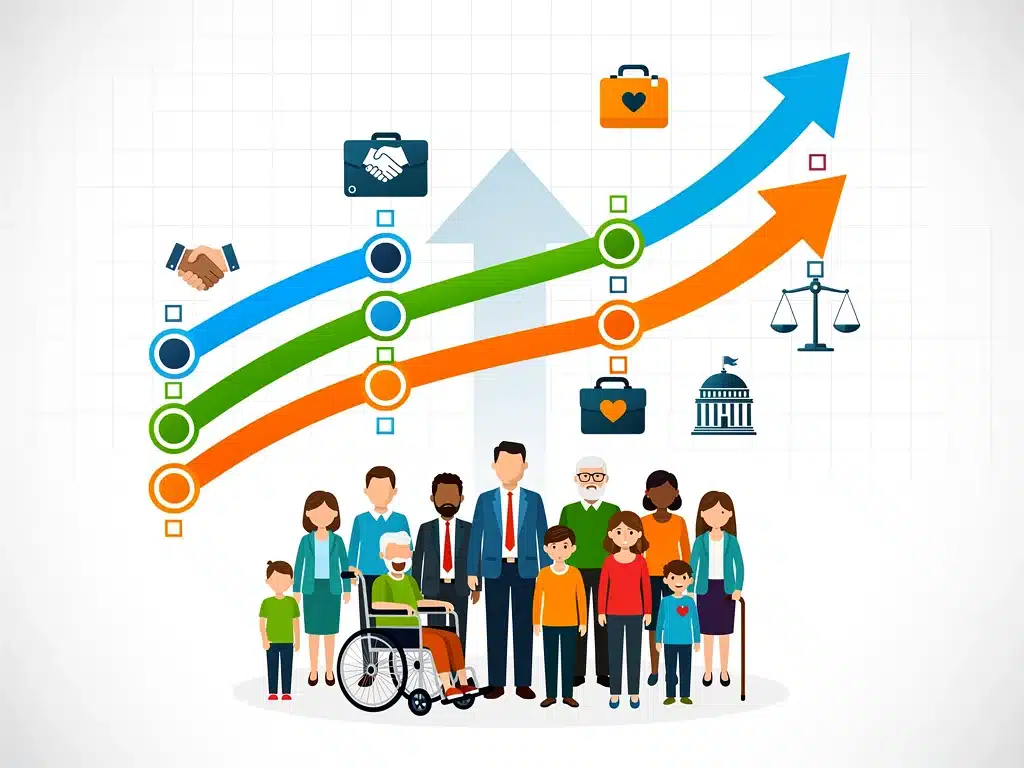
The intertwining of environmental concerns with social equity is increasingly recognized as essential for long-term economic stability. By addressing both, policies aim to foster a more sustainable and inclusive economic model.
Corporate Responsibility and Investor Expectations
Beyond direct government policy, corporate responsibility and evolving investor expectations are playing a crucial role in shaping the financial impact of social justice.
Companies are increasingly being evaluated not just on their profits, but also on their environmental, social, and governance (ESG) performance.
This shift means that businesses are proactively adopting more equitable hiring practices, investing in community development, and committing to sustainable operations.
The financial impact of social justice for corporations includes enhanced brand reputation, improved customer loyalty, and access to a growing pool of ESG-conscious investors.
Conversely, companies that fail to address social justice concerns risk reputational damage, consumer boycotts, and divestment from institutional investors. This pressure from both consumers and capital markets is a powerful driver for corporate change.
ESG Factors and Financial Performance
- Improved access to capital from ESG-focused investment funds.
- Enhanced consumer trust and brand loyalty.
- Reduced operational risks associated with social and environmental controversies.
- Attraction and retention of diverse talent.
The market is increasingly rewarding companies that demonstrate a genuine commitment to social justice, recognizing that these values contribute to long-term financial resilience and growth. This dynamic illustrates how the financial impact of social justice extends deeply into corporate strategy.
Challenges and Potential Economic Headwinds
While the potential benefits of these social justice policy shifts are significant, it is equally important to acknowledge the challenges and potential economic headwinds they may present.
Implementing such large-scale changes requires substantial financial resources, which can lead to debates over taxation and budget allocation.
Businesses may face increased compliance costs, particularly those adapting to new labor laws, environmental regulations, or healthcare mandates. There could also be short-term disruptions in certain industries as they transition to new operating models or supply chain requirements.
The overall financial impact of social justice depends heavily on effective policy design, robust implementation, and continuous evaluation. Poorly executed policies could lead to unintended consequences, hindering economic growth or creating new forms of inequality.
Navigating Implementation Complexities
- Potential for increased government spending and budget debates.
- Adjustment costs for businesses adapting to new regulations.
- Risk of short-term economic disruptions in transitioning sectors.
- Need for careful policy design to avoid unintended consequences.
Balancing the pursuit of social equity with economic stability is a delicate act. Transparent communication, stakeholder engagement, and adaptive policymaking will be essential to mitigate these challenges and maximize the positive financial impact of social justice.

Measuring Success: Metrics and Long-Term Outlook
To truly understand the financial impact of social justice, robust metrics and a long-term outlook are essential. Measuring success goes beyond immediate economic indicators to encompass broader societal well-being and equitable distribution of prosperity.
Key metrics will include changes in income inequality, poverty rates, access to education and healthcare, and environmental quality. Economic growth should be assessed not just in terms of GDP, but also in how inclusively that growth is shared across different demographic groups and regions.
The long-term outlook suggests that sustained investment in social justice policies can lead to a more resilient, innovative, and stable economy. A society where everyone has the opportunity to thrive is inherently more productive and less prone to social unrest or economic downturns.
The financial impact of social justice is not a short-term phenomenon but a foundational element of sustainable economic development. It requires a commitment to continuous improvement and an understanding that societal well-being is intrinsically linked to economic health.
The Role of Advocacy and Public Discourse
Public discourse and advocacy play a critical role in shaping the trajectory and ultimate financial impact of social justice initiatives. Public opinion, informed by factual analysis and robust debate, can influence policy decisions and their implementation.
Advocacy groups often highlight the human cost of inequality and the economic benefits of inclusive policies, pushing for reforms that might otherwise be overlooked.
Their efforts ensure that the conversation around the financial impact of social justice remains at the forefront of public and political agendas.
Conversely, misinformed or polarized discourse can impede progress, creating resistance to policies that could yield significant positive returns. Therefore, clear, objective reporting and analysis are vital for fostering constructive dialogue.
Shaping the Narrative and Driving Change
- Influencing public opinion through evidence-based advocacy.
- Ensuring social justice remains a priority in policy debates.
- Countering misinformation that hinders progressive reforms.
- Mobilizing public support for equitable economic development.
The ongoing conversation surrounding the financial impact of social justice is dynamic, reflecting diverse perspectives and competing interests. Informed public engagement is key to navigating these complexities and achieving meaningful change.
| Key Policy Area | Primary Financial Impact |
|---|---|
| Affordable Healthcare Expansion | Boosts workforce productivity, reduces medical debt. |
| Criminal Justice Reform | Increases labor supply, revitalizes local economies. |
| Green Infrastructure Investment | Creates green jobs, lowers health costs, drives innovation. |
| Corporate ESG Alignment | Enhances brand value, attracts responsible investment. |
Frequently Asked Questions About the Financial Impact of Social Justice
The primary financial impact of social justice policies is multifaceted, often leading to increased economic stability, enhanced workforce productivity, and reduced public expenditures in areas like healthcare and welfare. These policies aim to create a more equitable distribution of economic opportunities and resources across society.
Healthcare expansion can positively impact the economy by improving public health, leading to a more productive workforce and reduced absenteeism. It also lessens medical debt, which can free up household finances for other spending and reduce the burden on social safety nets, contributing to overall economic growth.
Yes, criminal justice reform can significantly boost labor markets. By facilitating the reintegration of formerly incarcerated individuals into the workforce, these reforms increase labor supply, reduce unemployment, and enhance tax revenues. They also contribute to revitalizing local economies and fostering community development.
Investments in green infrastructure offer substantial economic benefits, including the creation of new jobs in renewable energy and sustainable technologies. They also lead to improved environmental quality, which can reduce healthcare costs, and stimulate local economies through construction and maintenance projects, promoting long-term sustainability.
Corporate ESG (Environmental, Social, Governance) factors are increasingly linked to financial performance. Strong ESG practices can enhance brand reputation, attract responsible investors, improve customer loyalty, and reduce operational risks. Companies with robust social justice commitments often demonstrate greater resilience and long-term value creation, influencing their overall financial health.
Looking Ahead: The Interconnected Future of Justice and Prosperity
The analysis of The Financial Impact of Social Justice reveals a future where social equity and economic prosperity are increasingly intertwined. These policy shifts are not isolated events but components of a broader movement towards a more inclusive and sustainable economy.
Understanding these dynamics is crucial for businesses, policymakers, and citizens alike, as they will undoubtedly shape the landscape of the United States in the coming years. Monitoring their implementation and evaluating their outcomes will be key to navigating this evolving environment.
The path forward requires a continuous dialogue, informed by data and a commitment to equitable growth, ensuring that the financial impact of social justice translates into tangible benefits for all segments of society.