Managing Executive Conflicts of Interest: 3 Mandatory Disclosure Protocols
Advertisements
When corporate leadership faces competing loyalties, unaddressed Executive Conflicts of Interest can quietly compromise governance and trigger devastating legal exposure. Protecting your board and safeguarding shareholder trust requires far more than passive ethics policies—it demands active compliance.
Navigating dual roles and potential self-dealing among top officers calls for precise, non-negotiable transparency measures. Establishing clear reporting channels and mandatory vetting processes ensures that personal financial stakes never obscure fiduciary duties.
Whether you are refining your governance framework or updating compliance programs for regulatory scrutiny, proactive risk management is essential. Here are the three non-negotiable reporting standards every leadership team must implement to maintain organizational integrity.
The Evolving Landscape of Executive Conflicts
The regulatory environment surrounding executive conflicts of interest has grown increasingly stringent, reflecting a broader societal demand for corporate accountability. Recent amendments to corporate governance guidelines and the enforcement actions by bodies such as the SEC highlight this intensified scrutiny.
Companies are now expected to not only have policies in place but also to demonstrate their effective implementation and continuous oversight. This shift necessitates a proactive approach to identifying, managing, and disclosing potential conflicts, moving beyond mere compliance to fostering a culture of integrity.
The complexity of modern corporate structures, including global operations and intricate financial instruments, further complicates the identification of all potential conflicts. This evolving landscape requires continuous education and adaptation of internal protocols to remain effective and legally sound.
Defining Executive Conflicts of Interest
An executive conflict of interest arises when a corporate officer's personal interests, or the interests of their close associates, could potentially influence their professional decisions within the company. These conflicts can be direct or indirect, financial or non-financial, and may involve a wide range of activities.
Examples include an executive holding a significant stake in a supplier, serving on the board of a competitor, or engaging in personal transactions that benefit from their corporate position. The key is the potential for personal gain to sway decisions that should be made solely in the best interest of the corporation and its shareholders.
Properly defining and categorizing these conflicts is the foundational step in managing complex executive conflicts of interest effectively. Without clear definitions, the application of disclosure protocols becomes ambiguous and prone to misinterpretation, undermining their efficacy.
Regulatory Drivers and Enforcement Trends
Regulatory bodies in the U.S., including the Securities and Exchange Commission (SEC) and various state corporate commissions, are increasingly vigilant in enforcing conflict of interest rules. Penalties for non-compliance can be severe, ranging from substantial fines to imprisonment for individuals involved.
The trend indicates a move towards greater personal accountability for corporate officers, underscoring the necessity of strict adherence to disclosure protocols. Public companies, in particular, face heightened scrutiny due to their obligations to shareholders and the broader market.
Understanding these regulatory drivers is crucial for any corporate officer seeking to navigate the complexities of their role responsibly. The emphasis is now firmly on proactive prevention and transparent disclosure rather than reactive damage control, making robust frameworks for managing complex executive conflicts of interest indispensable.
Mandatory Disclosure Protocol 1: Annual Attestation and Certification
The first mandatory protocol for corporate officers involves an annual attestation and certification process. This requires executives to formally declare any potential or actual conflicts of interest on an annual basis, often through a standardized questionnaire or online portal.
This protocol serves as a critical baseline, ensuring that all executives periodically review their personal and professional dealings for potential conflicts. The act of signing a certification form reinforces the personal responsibility associated with ethical conduct and compliance.
Companies typically integrate this process into their broader compliance programs, providing training and resources to help officers identify and report conflicts accurately. This systematic approach is fundamental to managing complex executive conflicts of interest comprehensively.
Key Components of Annual Attestation
Comprehensive Questionnaire: Executives complete a detailed questionnaire covering financial interests, external board memberships, family relationships, and significant personal transactions.
Affirmative Declaration: A sworn statement affirming that all disclosed information is accurate and complete, and that no undisclosed conflicts exist.
Policy Review Confirmation: Certification that the executive has reviewed and understands the company’s conflict of interest policy and agrees to abide by its terms.
Managerial Oversight: The completed attestations are typically reviewed by legal, compliance, or human resources departments to identify and address any flagged issues.
This annual exercise is not merely a formality; it is a vital tool for maintaining an up-to-date record of potential conflicts and ensuring ongoing awareness among the executive team. The robustness of this protocol directly impacts the effectiveness of managing complex executive conflicts of interest.
Ensuring Accuracy and Completeness
The efficacy of annual attestation hinges on the accuracy and completeness of the information provided by corporate officers. Companies must create an environment where executives feel comfortable disclosing potential conflicts without fear of undue reprisal.
Training sessions and clear communication regarding the purpose and importance of these disclosures can significantly improve compliance rates and data quality. Anonymous reporting channels can also supplement this process, allowing for the disclosure of sensitive information.
Regular audits of the attestation process and cross-referencing information with public records can further enhance data integrity. This commitment to accuracy is paramount in successfully managing complex executive conflicts of interest.
Mandatory Disclosure Protocol 2: Transaction-Specific Disclosure
Beyond annual declarations, a second critical protocol mandates transaction-specific disclosure. This means that corporate officers must disclose any potential conflict of interest that arises in connection with a specific business transaction or decision, as it occurs.
This real-time disclosure is crucial because annual attestations might not capture newly emerging conflicts or those that are highly specific to a particular deal. It ensures that decisions are made with full transparency regarding any executive’s personal stake.
For example, if a company is considering acquiring another firm, and an executive has a personal investment in that target firm, this conflict must be disclosed immediately. This immediate notification is key to managing complex executive conflicts of interest effectively.
Mechanisms for Real-Time Reporting
Companies typically establish clear internal procedures for transaction-specific disclosures. This often involves a dedicated reporting channel, such as a compliance officer, legal counsel, or an ethics committee, to whom executives can report conflicts as they arise.
The process usually requires a written submission detailing the nature of the conflict, the transaction involved, and the extent of the executive’s interest. This documentation provides a clear audit trail and facilitates informed decision-making by the company’s independent directors.
Implementing a robust system for real-time reporting is essential for maintaining the integrity of corporate decision-making and preventing situations where undisclosed conflicts could sway critical business outcomes. This proactive approach is fundamental to managing complex executive conflicts of interest.

Role of Independent Board Members
Independent board members play a pivotal role in overseeing transaction-specific disclosures. Upon receiving a disclosure, these independent directors are responsible for evaluating the conflict, determining its materiality, and deciding on appropriate mitigation strategies.
These strategies might include recusing the conflicted executive from discussions or voting, establishing an independent committee to review the transaction, or even requiring the executive to divest their interest. The goal is to neutralize the conflict and protect the company’s interests.
The involvement of independent oversight ensures an objective assessment of the conflict and strengthens corporate governance. This layer of scrutiny is indispensable when managing complex executive conflicts of interest, providing a check against potential abuses.
Mandatory Disclosure Protocol 3: Public Disclosures (SEC Filings)
For publicly traded companies, the third mandatory protocol involves public disclosures through regulatory filings, primarily with the Securities and Exchange Commission (SEC). This protocol ensures that shareholders and the broader market are aware of significant executive conflicts of interest.
SEC regulations, such as those under the Sarbanes-Oxley Act and Dodd-Frank Act, mandate the disclosure of certain transactions and relationships that could indicate a conflict. These filings provide transparency and allow investors to make informed decisions about their investments.
Examples include disclosing related-party transactions, executive compensation arrangements that could create conflicts, and certain stock ownership details. This public transparency is a cornerstone of good corporate governance and is critical for managing complex executive conflicts of interest in public entities.
Key SEC Disclosure Requirements
Proxy Statements (Form 14A): Requires disclosure of executive compensation, related-party transactions, and director independence, all of which can reveal potential conflicts.
Annual Reports (Form 10-K): Includes detailed information about the company’s business, risk factors, and legal proceedings, which may contain disclosures related to conflicts of interest.
Current Reports (Form 8-K): Used to report material events that shareholders should know about, potentially including significant new related-party transactions or changes in executive relationships.
Section 16 Filings (Forms 3, 4, and 5): Discloses stock ownership and trading activities of insiders (officers, directors, and 10% shareholders), which can highlight potential conflicts related to personal trading.
Compliance with these SEC requirements is not optional; it is a legal obligation for public companies. Failure to adhere to these disclosure mandates can result in significant regulatory penalties and damage to investor confidence, making effective frameworks for managing complex executive conflicts of interest paramount.
Impact on Investor Confidence and Market Integrity
Public disclosures of executive conflicts of interest are vital for maintaining investor confidence and the overall integrity of capital markets. When investors have access to comprehensive and timely information, they can better assess the risks associated with a company’s governance.
Transparency in this area signals a company’s commitment to ethical practices and good corporate citizenship. Conversely, a lack of transparency or the discovery of undisclosed conflicts can severely erode trust, leading to stock price declines and difficulty in attracting capital.
Therefore, meticulously adhering to public disclosure protocols is not just a legal requirement but a strategic imperative for long-term success. It is a critical component of successfully managing complex executive conflicts of interest in the public eye.
Building a Culture of Transparency and Ethics
Beyond the formal protocols, effectively managing complex executive conflicts of interest requires fostering a robust culture of transparency and ethical behavior within the organization. Policies and procedures, while necessary, are only as effective as the underlying ethical commitment of the executive team.
This culture is built through consistent leadership messaging, regular ethics training, and a clear articulation of the company’s values. When executives understand that ethical conduct is a core expectation, they are more likely to proactively identify and disclose potential conflicts.
A strong ethical culture also empowers employees at all levels to raise concerns without fear of retaliation, creating an additional layer of oversight and accountability. This holistic approach is essential for truly managing complex executive conflicts of interest.
Leadership's Role in Ethical Governance
The tone at the top is paramount in shaping a company’s ethical environment. Corporate leaders, particularly the CEO and board of directors, must visibly champion ethical conduct and demonstrate an unwavering commitment to transparency.
Their actions and communications set the standard for the entire organization. When leaders prioritize integrity, it sends a clear message that ethical considerations supersede personal gain, reinforcing the importance of managing complex executive conflicts of interest.
This involves not only adhering to disclosure protocols themselves but also actively promoting their understanding and compliance throughout the executive ranks. Leadership must lead by example in all aspects of corporate ethics.
Continuous Training and Education Programs
Regular and comprehensive training programs are indispensable for ensuring that all corporate officers remain fully aware of their obligations regarding conflicts of interest. These programs should cover the company’s specific policies, relevant regulatory requirements, and practical examples of potential conflicts.
Training should not be a one-off event but an ongoing process, updated to reflect changes in regulations, business operations, and emerging ethical dilemmas. Interactive sessions and case studies can help executives better understand the nuances of managing complex executive conflicts of interest.
By investing in continuous education, companies empower their executives with the knowledge and tools needed to proactively identify and address conflicts, thereby strengthening their overall governance framework.
Challenges in Implementing Disclosure Protocols
Despite the clear benefits, implementing and maintaining effective disclosure protocols for managing complex executive conflicts of interest can present several challenges. These can range from the inherent difficulty in identifying all potential conflicts to ensuring consistent adherence across a large organization.
One significant challenge is the subjective nature of what constitutes a conflict, particularly in nuanced situations. Executives may genuinely not perceive a personal interest as conflicting with their corporate duties, requiring clear guidance and robust training.
Another hurdle is the potential for executives to be reluctant to disclose sensitive personal information, highlighting the need for confidential and secure reporting mechanisms. Addressing these challenges is vital for successful implementation of protocols for managing complex executive conflicts of interest.
Overcoming Disclosure Reluctance
Executives may hesitate to disclose conflicts due to privacy concerns, fear of negative perception, or even a lack of understanding about what needs to be reported. Companies must proactively address these concerns to foster a culture of open disclosure.
Ensuring confidentiality, providing clear explanations of why certain information is required, and emphasizing the company’s commitment to fair and objective review processes can help alleviate reluctance. Offering a clear path for remediation rather than immediate punitive action can also encourage disclosure.
Ultimately, trust is a critical component in overcoming disclosure reluctance. When executives trust that the process is fair and designed to protect both their interests and the company's, they are more likely to comply with requirements for managing complex executive conflicts of interest.
Maintaining Consistency Across Global Operations
For multinational corporations, maintaining consistent disclosure protocols across diverse legal and cultural jurisdictions poses a unique challenge. What constitutes a conflict or requires disclosure can vary significantly from one country to another.
Companies must develop global policies that are adaptable to local regulations while upholding a universal standard of ethical conduct. This often requires engaging local legal counsel and compliance experts to ensure adherence to all applicable laws.
Centralized oversight combined with localized implementation strategies is key to ensuring consistency. This integrated approach is essential for effectively managing complex executive conflicts of interest in a globalized business environment.
The Role of Technology in Modern Disclosure
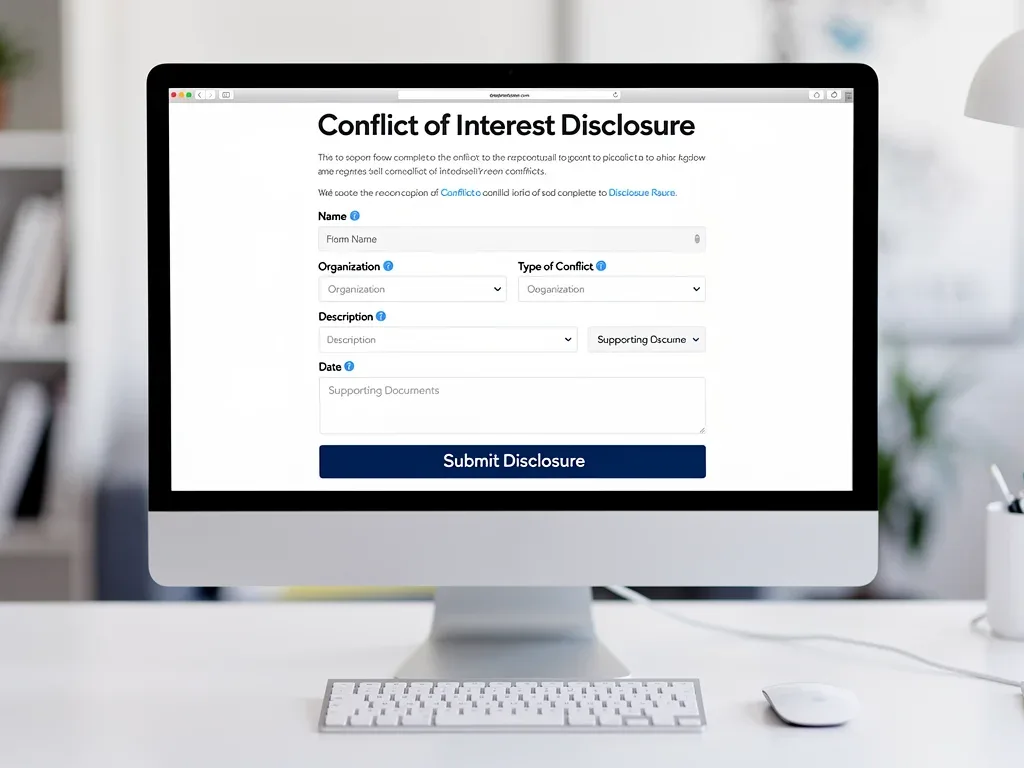
Technology plays an increasingly vital role in streamlining and enhancing the effectiveness of disclosure protocols for managing complex executive conflicts of interest. Digital platforms and automated systems can simplify the reporting process, improve data management, and provide better oversight.
Online portals for annual attestations, for example, can guide executives through the disclosure process with clear prompts and definitions, reducing ambiguity. These systems can also flag potential issues for review by compliance officers, improving efficiency.
Furthermore, data analytics can be employed to identify patterns or anomalies in disclosures that might indicate systemic issues or previously unrecognized types of conflicts. Leveraging technology is a strategic advantage in managing complex executive conflicts of interest.
Automated Disclosure Platforms
Automated disclosure platforms offer numerous benefits, including ease of use for executives, centralized data storage, and enhanced reporting capabilities for compliance teams. These platforms can be customized to incorporate specific company policies and regulatory requirements.
They can also automate reminders for annual attestations and track the progress of disclosures, ensuring timely completion. The reduction in manual effort allows compliance professionals to focus on analysis and mitigation rather than administrative tasks.
By adopting such technological solutions, companies can significantly improve the efficiency and reliability of their conflict of interest management programs. This modernization is key to effectively managing complex executive conflicts of interest in the digital age.
Data Analytics for Risk Identification
Advanced data analytics can provide valuable insights into potential conflict of interest risks that might otherwise go unnoticed. By analyzing disclosure data alongside other corporate information, companies can identify trends, correlations, and potential areas of concern.
For instance, analytics might reveal an unusual number of related-party transactions with a specific vendor or a pattern of executive investments in companies that frequently bid on corporate contracts. These insights can trigger further investigation and proactive risk mitigation.
This data-driven approach enhances the company’s ability to predict and prevent conflicts, moving beyond reactive measures to a more proactive risk management strategy. This analytical capability is a powerful tool for managing complex executive conflicts of interest.
Future Trends in Conflict of Interest Management
The field of conflict of interest management is not static; it continues to evolve in response to new business models, technological advancements, and shifting societal expectations. Staying abreast of these future trends is crucial for maintaining effective disclosure protocols.
One emerging trend is the increasing focus on environmental, social, and governance (ESG) factors, which can introduce new dimensions to conflicts of interest, particularly regarding investments and partnerships. Companies must adapt their protocols to encompass these broader ethical considerations.
Another trend is the growing use of artificial intelligence and machine learning to identify potential conflicts, offering even more sophisticated risk detection capabilities. These advancements will further shape how companies approach managing complex executive conflicts of interest.
ESG Integration into Conflict Policies
The rising prominence of ESG considerations means that companies must now evaluate conflicts of interest not just through a financial lens but also through an ethical and sustainability lens.
An executive’s personal investments in industries with poor environmental records, for example, could create a conflict with a company’s stated ESG goals.
Integrating ESG factors into conflict of interest policies requires a broader definition of what constitutes a conflict and more nuanced disclosure requirements. This expanded scope reflects a more holistic view of corporate responsibility.
Companies that proactively incorporate ESG into their conflict management frameworks will be better positioned to meet stakeholder expectations and demonstrate their commitment to responsible business practices. This adaptation is essential for managing complex executive conflicts of interest in a modern context.
Leveraging AI for Predictive Conflict Detection
The future of conflict of interest management likely involves greater reliance on artificial intelligence and machine learning. These technologies have the potential to analyze vast amounts of data—both internal and external—to predict and identify potential conflicts before they materialize.
AI algorithms could, for example, cross-reference executive financial disclosures with public company databases, news articles, and social media to flag previously unrecognized connections or patterns. This predictive capability would significantly enhance proactive risk management.
While still in early stages, the application of AI in this domain promises to revolutionize how companies approach managing complex executive conflicts of interest, offering unprecedented levels of insight and foresight.
Key Protocol | Purpose and Impact |
|---|---|
Annual Attestation | Periodic review of all executive interests, ensuring broad compliance. |
Transaction-Specific Disclosure | Real-time reporting of conflicts related to specific business decisions. |
Public Disclosures (SEC) | Mandated transparency for public companies to inform shareholders. |
Ethical Culture | Foundation for effective compliance, driven by leadership and training. |
Frequently Asked Questions About Executive Conflicts of Interest
What exactly is an executive conflict of interest?▼
An executive conflict of interest occurs when a corporate officer's personal interests, or those of their close associates, could potentially influence their professional duties or decisions within the company. This can include financial gains, external roles, or personal relationships that create a divided loyalty, impacting ethical corporate governance.
Why are mandatory disclosure protocols important for corporate officers?▼
Mandatory disclosure protocols are crucial for transparency, accountability, and maintaining shareholder trust. They help identify and mitigate potential conflicts before they cause reputational damage, legal liabilities, or unfair business advantages. Proper disclosure is a cornerstone of ethical corporate governance and regulatory compliance.
How do annual attestations differ from transaction-specific disclosures?▼
Annual attestations are periodic, comprehensive reviews of an executive's potential conflicts, typically completed once a year. Transaction-specific disclosures, however, are real-time reports required when a conflict arises in connection with a particular business deal or decision, ensuring immediate transparency for critical events.
What role do independent board members play in managing conflicts?▼
Independent board members provide objective oversight. They evaluate disclosed conflicts, determine their materiality, and decide on appropriate mitigation strategies, such as recusing the conflicted executive. Their involvement ensures decisions are made in the company's best interest, free from undue influence, enhancing ethical oversight.
Are there technological solutions to help manage conflicts of interest?▼
Yes, technology plays a growing role. Automated disclosure platforms simplify reporting and data management, while data analytics can identify patterns and risks. These tools enhance efficiency, improve compliance, and offer predictive capabilities, making the process of managing complex executive conflicts of interest more robust and streamlined for corporate officers.
Looking Ahead
The imperative for Managing Executive Conflicts of Interest will only intensify. Companies must remain vigilant, adapting their frameworks to new challenges and leveraging technology to enhance transparency and compliance.
The focus on ethical governance, driven by both regulatory bodies and public expectations, necessitates continuous improvement in how conflicts are identified, disclosed, and mitigated, ensuring corporate integrity in an evolving business world.