Code of Conduct: 6 Essential Ethics Revisions for 2026
Advertisements
Is your company relying on outdated workplace policies to manage emerging digital risks? Modernizing your Code of Conduct is no longer optional as updated governance standards redefine organizational accountability. Forward-thinking leadership teams are actively revising their operational guidelines to match heightened regulatory and cultural expectations.
The rapid evolution of artificial intelligence deployment, remote work boundaries, and supply chain integrity requires a modernized ethical framework. Core workplace standards must now address algorithmic bias, automated decision-making, and stricter data privacy controls alongside traditional anti-corruption policies.
Failing to align core corporate values with these modern compliance requirements leaves organizations vulnerable to reputational fallout and legal scrutiny. Re-evaluating internal governance policies ensures your executive mandate protects organizational integrity while fostering psychological safety across your entire workforce.
The Urgency of Updating Your Ethical Framework
The corporate landscape is in constant flux, driven by technological advancements, evolving societal norms, and increasingly stringent regulatory demands. What was once considered a robust ethical framework a few years ago might now be woefully inadequate.
Organizations are facing unprecedented scrutiny, not just from regulators but also from employees, customers, and the public at large. A static code of conduct is a liability, not an asset, in this dynamic environment.
The imperative to revise ethical guidelines is no longer a suggestion but a critical mandate for sustained credibility and operational integrity. Ignoring these shifts can lead to significant reputational damage and legal repercussions.
Defining the 2026 Governance Expectations
Updated governance expectations for 2026 signal a clear shift towards more proactive and comprehensive ethical oversight. These expectations stem from a confluence of global trends and specific regulatory initiatives.
Key among these are directives emphasizing greater transparency in business operations, heightened accountability for executive actions, and a broadened scope of ethical responsibility extending to supply chains and digital ecosystems.
Organizations must understand that these are not merely incremental changes but foundational shifts requiring a re-evaluation of their entire ethical posture. The question, Is Your Code of Conduct Obsolete?, is therefore highly pertinent.
Emerging Regulatory Landscapes
New data privacy laws expanding beyond traditional boundaries.
Increased focus on environmental, social, and governance (ESG) metrics.
Stricter anti-corruption and anti-bribery enforcement.
The regulatory environment is becoming increasingly complex, with cross-border implications that demand a globally consistent yet locally nuanced approach to ethics. Companies operating internationally must navigate a patchwork of regulations that are often in tension with each other.
Six Essential Ethics Revisions for 2026
To address the question, Is Your Code of Conduct Obsolete?, companies must focus on specific areas. These revisions are designed to bring codes of conduct in line with contemporary challenges and future-proof ethical frameworks.
These essential updates cover everything from digital ethics to supply chain accountability, reflecting a holistic view of corporate responsibility. Proactive implementation of these changes can mitigate risks and enhance organizational resilience.
Failure to integrate these revisions could expose companies to significant legal, financial, and reputational hazards. The time for re-evaluation is now.
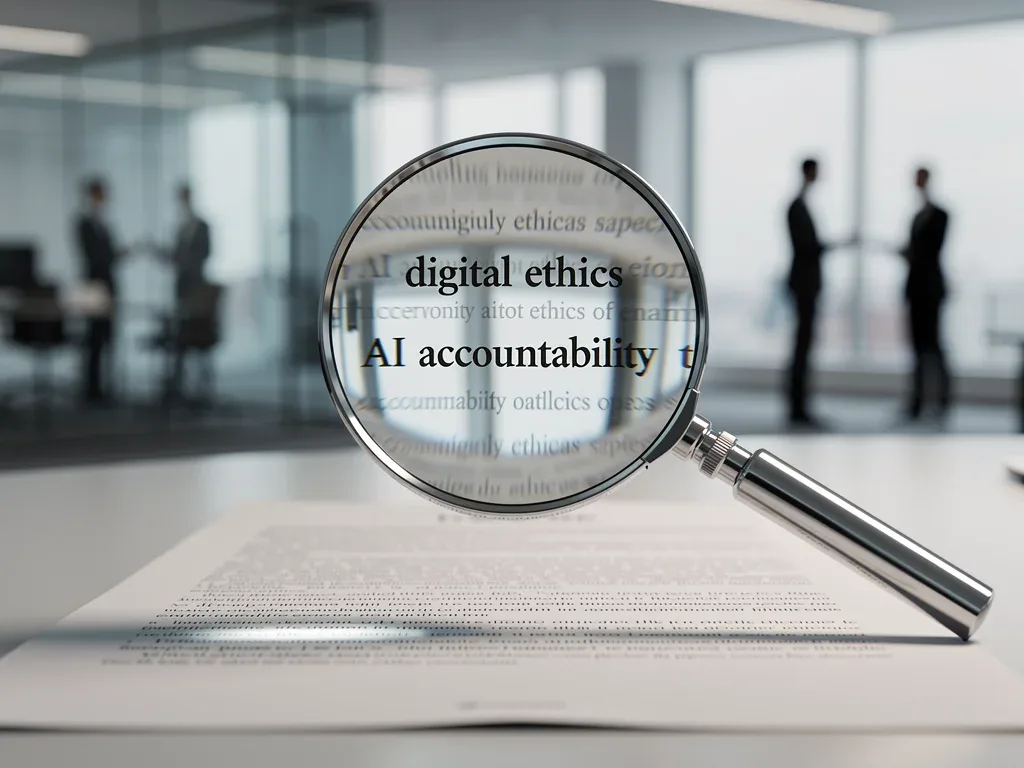
1. Digital Ethics and AI Accountability
The rapid proliferation of artificial intelligence (AI) and other advanced digital technologies introduces novel ethical dilemmas that traditional codes of conduct were not designed to address. Issues such as algorithmic bias, data privacy in AI applications, and the ethical use of automation are paramount.
Codes must now explicitly outline guidelines for the responsible development, deployment, and monitoring of AI systems. This includes clear policies on data handling, transparency in AI decision-making, and mechanisms for addressing AI-driven discrimination.
Companies need to establish a framework for AI accountability, ensuring that human oversight remains central and that ethical considerations are embedded throughout the AI lifecycle. This is a critical component for any organization asking, Is Your Code of Conduct Obsolete?.
2. Environmental, Social, and Governance (ESG) Integration
ESG factors have moved from niche considerations to mainstream business imperatives. Codes of conduct must now explicitly integrate commitments to environmental sustainability, social equity, and robust governance practices.
This means detailing policies on carbon footprint reduction, fair labor practices, diversity and inclusion, and transparent financial reporting. ESG integration is not just about compliance; it's about demonstrating genuine corporate citizenship.

Organizations are increasingly judged by their ESG performance, making its inclusion in the code of conduct essential for stakeholder trust and investor confidence. This revision is central to understanding Is Your Code of Conduct Obsolete?.
3. Enhanced Supply Chain Ethics and Due Diligence
Companies are increasingly held responsible for the ethical conduct of their entire supply chain, not just their direct operations. This necessitates more rigorous due diligence and clear ethical expectations for all partners.
Codes of conduct must mandate comprehensive supplier assessments, regular audits, and clear protocols for addressing ethical breaches within the supply chain, including issues like forced labor, child labor, and environmental exploitation.
Transparency and traceability across the supply chain are no longer optional but critical components of a modern ethical framework. This directly impacts the question, Is Your Code of Conduct Obsolete?.
4. Whistleblower Protection and Reporting Mechanisms
Robust whistleblower protection programs are crucial for fostering a culture of transparency and accountability. Employees must feel safe and empowered to report ethical concerns without fear of retaliation.
Revisions should include clear, accessible, and confidential reporting channels, strong anti-retaliation policies, and transparent processes for investigating and addressing reported issues. The effectiveness of these mechanisms is a key indicator of an organization's ethical health.
The emphasis on protecting those who speak up reinforces an organization's commitment to ethical conduct and helps identify issues before they escalate. This element is vital in determining Is Your Code of Conduct Obsolete?.
5. Data Privacy and Cybersecurity Ethics
With data breaches and cyber threats on the rise, ethical considerations around data privacy and cybersecurity have become paramount. Codes of conduct must articulate clear principles for data collection, storage, use, and protection.
This includes adherence to global data protection regulations like GDPR and CCPA, as well as ethical guidelines for employee data, customer information, and proprietary business data. It's about respecting privacy as a fundamental right.
Companies must also address the ethical implications of using advanced surveillance technologies or monitoring employee activities. This specific revision is crucial for any organization wondering, Is Your Code of Conduct Obsolete?.
6. Diversity, Equity, and Inclusion (DEI) as a Core Value
DEI is no longer just a human resources initiative but a fundamental ethical imperative. Codes of conduct need to explicitly state commitments to fostering diverse, equitable, and inclusive workplaces.
This involves clear policies against discrimination and harassment, promotion of equal opportunities, and initiatives to create an inclusive culture where all employees feel valued and respected. DEI must be woven into the fabric of the organization's values.
Demonstrating a genuine commitment to DEI enhances employee morale, attracts top talent, and strengthens an organization's reputation. This is a non-negotiable revision for any company assessing, Is Your Code of Conduct Obsolete?.
Implementing and Communicating the Revisions
Revising the code of conduct is only the first step; effective implementation and communication are equally critical. A well-crafted code is ineffective if it is not understood, embraced, and consistently applied throughout the organization.
This involves a multi-faceted approach, including comprehensive training programs for all employees, clear communication channels for questions and concerns, and visible leadership commitment from the top down.
Regular reviews and updates are also essential to ensure the code remains relevant and responsive to emerging ethical challenges. The question, Is Your Code of Conduct Obsolete?, demands continuous attention.
Training and Engagement Strategies
Mandatory annual ethics training for all employees.
Interactive workshops focusing on real-world ethical dilemmas.
Creation of an ethics ambassador program to foster internal champions.
Engaging employees in the revision process can foster a sense of ownership and increase adherence. This participatory approach transforms the code from a mere document into a living guide for daily conduct. Companies must prioritize this to address Is Your Code of Conduct Obsolete?.
The Role of Leadership in Ethical Governance
Effective ethical governance begins at the top. Leadership must not only endorse the revised code of conduct but actively champion its principles through their actions and decisions. Their commitment sets the tone for the entire organization.
Leaders are expected to exemplify the highest ethical standards, serving as role models for employees at all levels. Their visible dedication to ethical conduct is a powerful determinant of the code's effectiveness and its integration into the corporate culture.
Without strong leadership buy-in and consistent reinforcement, even the most meticulously crafted code of conduct will fail to achieve its intended impact. This is fundamental when considering Is Your Code of Conduct Obsolete?.
Measuring the Impact of Ethical Revisions
To ensure that the revised code of conduct is effective, organizations must establish metrics for measuring its impact. This involves more than just tracking compliance; it requires assessing the overall ethical health of the company.
Key performance indicators (KPIs) can include the number of reported ethical concerns, employee perceptions of ethical culture, and the outcomes of internal investigations. Regular audits and assessments provide valuable insights into areas needing further attention.
A data-driven approach to ethics allows organizations to continuously refine their policies and practices, ensuring that their code of conduct remains a dynamic and effective tool. This is crucial for evaluating Is Your Code of Conduct Obsolete?.
Ethical Performance Metrics
Employee perception surveys on ethical leadership and culture.
Analysis of internal investigation trends and resolution times.
External benchmarks against industry ethical standards.
Measuring ethical performance provides tangible evidence of the code's efficacy and helps demonstrate accountability to all stakeholders. This continuous feedback loop is essential for maintaining an adaptive ethical framework.
Beyond Compliance: Fostering an Ethical Culture
While compliance with regulations is a baseline, the ultimate goal of revising a code of conduct is to cultivate a deeply embedded ethical culture. This goes beyond mere rule-following to encompass shared values and principles that guide every decision.
An ethical culture is one where employees instinctively choose the right path, even when no one is watching. It's built on trust, transparency, and a collective commitment to doing what is right for all stakeholders.
This cultural shift is the strongest defense against ethical lapses and the most powerful driver of long-term success. It answers the question, Is Your Code of Conduct Obsolete?, with a resounding commitment to integrity.
Key Revision Area | Brief Description |
|---|---|
Digital Ethics & AI | Guidelines for responsible AI, data privacy, and algorithmic fairness. |
ESG Integration | Explicit commitments to environmental, social, and governance principles. |
Supply Chain Ethics | Enhanced due diligence and ethical standards for all suppliers. |
Whistleblower Protection | Robust mechanisms for safe and confidential reporting without retaliation. |
Frequently Asked Questions About Ethics Revisions
Why are these ethics revisions critical for 2026?▼
Updated 2026 governance expectations reflect rapid shifts in technology, societal values, and regulatory landscapes. These revisions are crucial to ensure legal compliance, mitigate reputational risks, and maintain stakeholder trust in an evolving business environment.
How does AI accountability fit into a revised code of conduct?▼
AI accountability demands explicit guidelines for ethical AI development and deployment. This includes policies on algorithmic bias, data privacy in AI, transparent decision-making, and mechanisms for human oversight to prevent unintended ethical harms.
What role do ESG factors play in modern ethical codes?▼
ESG factors are now central to corporate ethics, moving beyond mere compliance. Codes must integrate commitments to environmental sustainability, social equity, and robust governance, demonstrating genuine corporate citizenship and attracting responsible investment.
What are the implications for supply chain ethics?▼
Companies are increasingly accountable for their entire supply chain's ethical conduct. Revisions require enhanced due diligence, regular audits, and clear protocols for addressing issues like forced labor and environmental exploitation among suppliers to ensure full transparency.
Beyond compliance, what is the ultimate goal of these revisions?▼
The ultimate goal is to foster a deeply embedded ethical culture, where integrity guides every decision. This moves beyond simply following rules, cultivating shared values and principles that empower employees to consistently choose the right course of action.
What this means
The imperative to address Is Your Code of Conduct Obsolete? underscores a fundamental shift in corporate responsibility. Organizations must move beyond static compliance frameworks to embrace dynamic ethical governance.
The integration of digital ethics, ESG principles, and enhanced supply chain oversight is no longer optional but critical for long-term viability and stakeholder trust. Companies that proactively adapt their ethical guidelines will be better positioned to navigate future challenges and uphold their integrity in an increasingly complex global marketplace.
This ongoing evolution demands continuous vigilance and a commitment to fostering a truly ethical culture from the top down.