Comparison of Activism Models: Which Strategies Yielded the Best Results in the Past 12 Months?
In an era of rapid social change, understanding which advocacy frameworks actually drive real impact requires a deep Activism Models Comparison. If you want your voice to cut through the noise, analyzing the mechanics behind recent successful movements is the essential first step.
Over the past year, we have seen a fascinating evolution in how grassroots organizing and digital mobilization intersect to challenge the status quo.
Examining these diverse social justice methodologies reveals a clear pattern between purely symbolic actions and those that secure tangible policy victories.
By evaluating the most effective campaigning strategies of the last 12 months, we can uncover a blueprint for modern resistance. Discover what truly moved the needle, why certain tactics succeeded where others failed, and how to build sustainable momentum for the future.
Understanding the Evolving Landscape of Activism
The past year has witnessed a surge in social and political movements globally, each employing distinct methodologies to achieve their objectives.
From grassroots organizing to sophisticated digital campaigns, the spectrum of activism is broader than ever, making an activism models comparison crucial for understanding efficacy.
Analyzing these diverse approaches allows us to discern patterns of success and identify the factors that contribute to a movement’s ability to drive change. This report provides a comprehensive overview, focusing on tangible outcomes and strategic innovations observed over the last 12 months.
Our objective is to offer a factual and objective look at what worked, why, and what implications these findings hold for future advocacy efforts. The goal is to provide insights that go beyond anecdotal evidence, grounded in verifiable results.
Direct Action and Mass Mobilization: A Force for Change
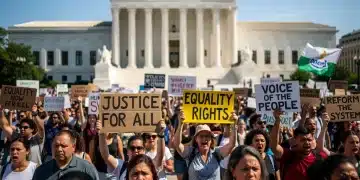
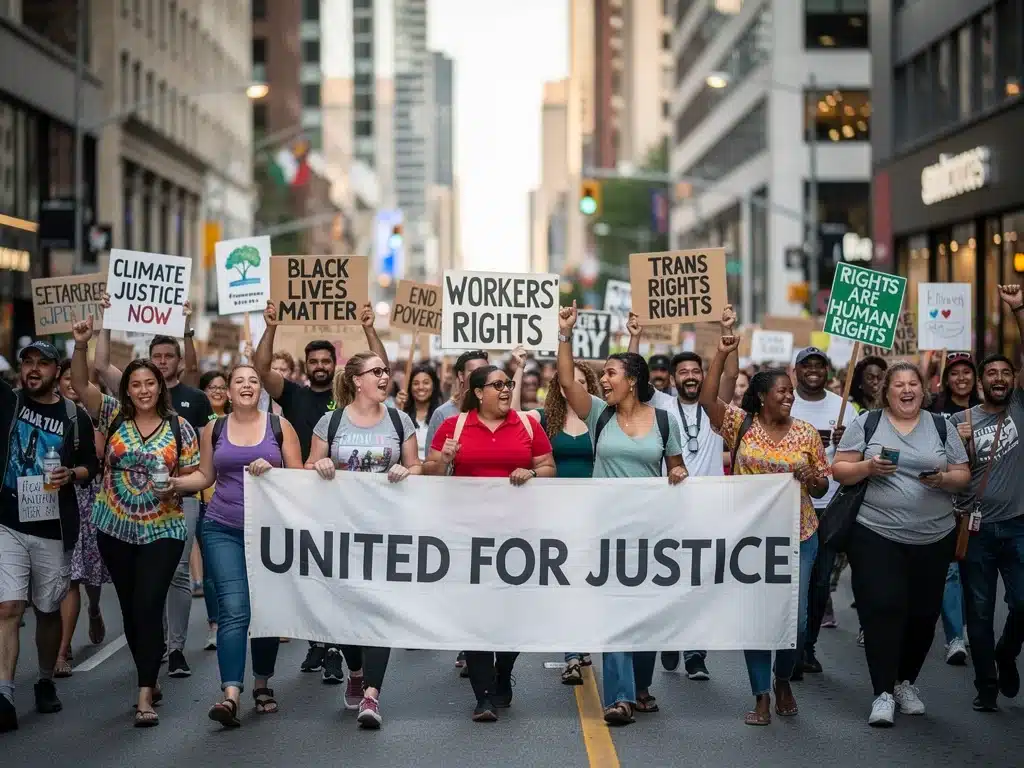
Direct action, characterized by protests, marches, and civil disobedience, continued to be a powerful tool in the past year. Movements like those advocating for climate justice and racial equality effectively used mass mobilization to draw public attention and pressure decision-makers.
The sheer scale of participation in some of these demonstrations underscored a collective urgency and dissatisfaction that traditional political channels often fail to address.
This visibility was instrumental in elevating specific issues to the forefront of national and international discourse.
However, the effectiveness of direct action often hinges on sustained engagement and clear messaging, avoiding diffuse demands that can dilute impact. The ability to maintain momentum beyond initial protests proved vital for long-term influence.
The Impact of Large-Scale Protests
Large-scale protests, when strategically organized, can create undeniable public pressure, forcing governments and corporations to respond. Their success often lies in their ability to disrupt the status quo and highlight injustices in a way that cannot be ignored.
These demonstrations also serve as powerful community-building events, fostering solidarity among participants and attracting new supporters to the cause. The emotional resonance of shared experience can be a significant catalyst for continued involvement.
- Increased media coverage, forcing issues into public debate.
- Heightened public awareness and shifts in opinion.
- Direct pressure on policymakers and corporate entities.
Challenges and Limitations of Mass Mobilization
While impactful, mass mobilization faces challenges, including potential for violence, logistical complexities, and the risk of public fatigue. Maintaining public support and positive media portrayal can be difficult over extended periods.
The sustainability of such movements requires robust organizational structures and a clear vision beyond immediate demands. Without these, even large-scale protests can dissipate without achieving their full potential.
Furthermore, the legal repercussions for participants can be a deterrent, necessitating careful planning and support networks for those involved in civil disobedience actions.

Digital Activism and Online Advocacy: Expanding Reach
The digital realm proved to be an indispensable arena for activism, enabling rapid information dissemination and global coordination. Social media platforms, online petitions, and crowdfunding became central to many successful campaigns, significantly broadening their reach.
Digital activism allows movements to bypass traditional gatekeepers of information, directly communicating with supporters and the wider public. This direct line of communication is vital for shaping narratives and mobilizing support quickly.
The accessibility of online tools also lowers the barrier to entry for participation, allowing individuals to contribute to causes from anywhere. This democratizes activism, giving a voice to those who might not engage in traditional forms of protest.
Leveraging Social Media for Impact
Social media campaigns demonstrated remarkable effectiveness in raising awareness and fostering engagement. Hashtags and viral content propelled critical issues into mainstream consciousness, often sparking offline action.
Platforms like X (formerly Twitter), Instagram, and TikTok allowed for real-time reporting from the ground, offering raw and immediate perspectives that resonated deeply with audiences. This immediacy built trust and urgency.
- Rapid dissemination of information and calls to action.
- Global reach and cross-border solidarity.
- Facilitation of online fundraising and resource mobilization.
The Double-Edged Sword of Digital Engagement
Despite its advantages, digital activism also presents challenges, including the spread of misinformation, ‘slacktivism,’ and vulnerability to online harassment. The ephemeral nature of viral content can also make sustained impact difficult.
Moreover, movements risk being co-opted or losing control of their narrative in the fast-paced, often chaotic environment of social media. Strategic oversight is crucial to maintain focus and authenticity.
An effective activism models comparison must consider how digital tactics integrate with and amplify, rather than replace, traditional organizing efforts for maximum impact.
Policy Advocacy and Institutional Engagement: Driving Systemic Change
For many movements, achieving lasting change necessitates engaging directly with legislative and institutional bodies. Policy advocacy, lobbying, and legal challenges were pivotal in translating public sentiment into concrete legal and structural reforms.
This approach often requires deep expertise, meticulous research, and sustained engagement with policymakers. The victories achieved through these methods, while sometimes less visible, often have profound and long-lasting effects.
Building coalitions with allied organizations and experts can significantly bolster the credibility and influence of policy-focused activism. This collaborative effort ensures a multi-faceted approach to complex issues.
Successful Legislative Campaigns
Several movements successfully pushed for new legislation or the repeal of discriminatory laws, demonstrating the power of targeted policy advocacy. These successes often involved years of dedicated work, building relationships and presenting compelling cases.
The strategic use of legal frameworks and judicial processes also yielded significant results, particularly in areas concerning civil rights and environmental protection. Litigation can be a powerful lever for systemic change.
- Enactment of new protective laws and regulations.
- Successful legal challenges against discriminatory practices.
- Increased funding for social programs and initiatives.
Navigating the Bureaucratic Labyrinth
Engaging with institutions is often a slow and arduous process, requiring patience and resilience. Bureaucratic inertia, political opposition, and entrenched interests can pose significant hurdles.
The need for specialized knowledge and access to resources can also limit participation, making this model less accessible to purely grassroots efforts. Strategic partnerships become even more critical here.
An effective activism models comparison reveals that policy advocacy often thrives when supported by public pressure generated through other means, creating a synergistic effect.
Community Organizing and Grassroots Development: Building Power from Below
Community organizing focuses on empowering local communities to identify their needs and collectively address them. This model emphasizes building leadership, fostering self-reliance, and creating sustainable local structures for change.
Its strength lies in its ability to adapt to specific local contexts, making solutions highly relevant and effective for the communities they serve. This bottom-up approach ensures that interventions are truly community-driven.
The long-term impact of community organizing often includes strengthened social cohesion, increased civic participation, and the development of local leaders who can sustain advocacy efforts over time.
Empowering Local Voices
By empowering local residents, these movements ensure that solutions are tailored to their unique circumstances and priorities. This localized approach often leads to more sustainable and equitable outcomes.
These initiatives frequently address issues such as local housing crises, food deserts, and access to essential services, demonstrating tangible improvements in people’s daily lives. Their success is often measured in direct community benefits.
- Development of local leadership and advocacy skills.
- Creation of community-led initiatives and programs.
- Increased civic participation at the local level.
The Gradual Nature of Grassroots Change
While deeply impactful, community organizing can be a slower process compared to other models, as it relies on building consensus and capacity from the ground up. Its effects are often seen over years, not months.
Funding and resource limitations can also pose significant challenges for grassroots organizations, often operating with minimal budgets and volunteer labor. Sustained support is crucial for their survival.
A comprehensive activism models comparison highlights that grassroots efforts, while incremental, build a foundational power that can underpin larger movements.

Strategic Communications and Narrative Shifting: Winning Hearts and Minds
Effective communication is paramount for any movement seeking to influence public opinion and inspire action. Strategic communications, including media relations, storytelling, and public education campaigns, played a vital role in shaping public discourse and garnering support.
Movements that successfully framed their issues in compelling and relatable ways often saw greater public engagement and empathy. Crafting a powerful narrative can transform complex issues into accessible calls to action.
This model emphasizes understanding target audiences and tailoring messages to resonate with their values and concerns. The ability to counter opposing narratives effectively is also a key component of success.
Crafting Compelling Narratives
Movements that effectively told their stories, using personal testimonies and clear data, managed to shift public perception on critical issues. The human element often proves more persuasive than abstract arguments alone.
Utilizing diverse media channels, from traditional news outlets to documentaries and podcasts, helped amplify these narratives. A multi-platform approach ensures broader reach and deeper penetration.
- Increased public understanding and empathy for a cause.
- Successful counter-narratives against opposition viewpoints.
- Mobilization of public support through emotional connection.
The Challenge of Information Overload
In an era of information overload, cutting through the noise and maintaining public attention is a constant struggle. Movements must continuously innovate their communication strategies to remain relevant.
The risk of misinterpretation or simplification of complex issues is also present, requiring careful messaging and consistent reinforcement of core tenets. Clarity is often sacrificed for virality.
An activism models comparison shows that strategic communication is not merely about broadcasting messages but about fostering genuine dialogue and understanding.
Hybrid Approaches and Synergy: The Most Effective Path
The past 12 months clearly demonstrated that the most impactful movements often adopted hybrid approaches, seamlessly integrating various activism models. Combining direct action with digital advocacy and policy engagement created a powerful synergy.
For example, a mass protest might be amplified by a coordinated social media campaign, which then generates public pressure for legislative action. This multi-pronged strategy maximizes impact across different spheres.
This integrated approach allows movements to leverage the strengths of each model while mitigating individual weaknesses, leading to more comprehensive and sustainable outcomes. It’s about building a robust ecosystem of change.
Examples of Integrated Success
Movements that successfully combined online organizing with offline demonstrations often achieved significant policy victories. The continuous feedback loop between digital and physical spaces proved highly effective.
The ability to pivot between different tactics based on evolving circumstances and opportunities also characterized successful campaigns. Adaptability and strategic flexibility are key traits.
- Coordinated online and offline mobilization efforts.
- Digital campaigns supporting legislative advocacy.
- Grassroots organizing informing broader strategic communications.
The Complexity of Coordination
While powerful, hybrid models demand sophisticated coordination, significant resources, and clear leadership to manage diverse activities. The risk of internal fragmentation or conflicting messages increases with complexity.
Maintaining a unified vision across multiple fronts and diverse groups requires strong organizational capacity and effective communication channels. This is often easier said than done.
Ultimately, a detailed activism models comparison indicates that movements with the capacity to integrate and adapt their strategies are best positioned for sustained success in the long run.
| Activism Model | Key Outcome/Effectiveness |
|---|---|
| Direct Action | High public visibility, immediate pressure, community solidarity. |
| Digital Advocacy | Broad reach, rapid mobilization, narrative control. |
| Policy Advocacy | Systemic change, legislative reforms, long-term impact. |
| Hybrid Approaches | Maximized impact, sustained momentum, adaptable strategy. |
Frequently Asked Questions About Activism Models
A successful activism model is defined by its ability to achieve tangible outcomes, whether through policy changes, shifts in public opinion, or increased resource allocation. It also involves sustained engagement, effective communication, and adaptability to evolving circumstances, ultimately leading to measurable progress toward its goals.
Digital activism is critically important today, offering unparalleled reach and speed for information dissemination and mobilization. It allows movements to engage a global audience, bypass traditional media gatekeepers, and foster a sense of collective identity. However, it is most effective when integrated with offline strategies to ensure real-world impact and avoid ‘slacktivism’.
Yes, grassroots organizing can absolutely lead to national change, though often indirectly. By building strong local bases, developing community leaders, and addressing specific local issues, grassroots movements create a foundation of power and experience. These local successes can then be scaled up or networked to influence broader national policies and social norms over time.
Major challenges for activism models include sustaining momentum, overcoming opposition from entrenched interests, and securing adequate funding and resources. Additionally, maintaining clear messaging in a fragmented information landscape, adapting to new technologies, and ensuring the safety of participants are ongoing hurdles that movements must strategically navigate.
Hybrid activism approaches are often more effective because they combine the strengths of various models, creating a synergistic effect. For example, direct action generates visibility, digital advocacy amplifies the message, and policy advocacy translates pressure into systemic change. This integrated strategy allows movements to tackle complex issues from multiple angles, increasing their chances of sustained success.
Looking Ahead: The Future of Activism
The findings from this activism models comparison underscore the dynamic nature of social change.
The most effective strategies from the past 12 months were those that demonstrated adaptability, a clear understanding of their target audiences, and a willingness to integrate diverse tactics. As societal challenges evolve, so too must the methods used to address them.
Future movements will likely continue to refine these hybrid approaches, leveraging technological advancements while maintaining the human-centered core of grassroots organizing.
The ability to foster genuine connection and collective action, both online and offline, will remain paramount for driving meaningful and lasting change.
Observers should watch for how movements innovate in response to emerging digital threats and increasingly complex geopolitical landscapes. The lessons learned from this past year provide a valuable roadmap for activists and advocates seeking to make a tangible difference.