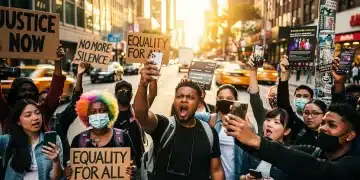
Identity Politics in the Digital Age: Analyzing the Impact on National Unity by Mid-2026
Understanding these dynamics is crucial for navigating future political landscapes and fostering national unity.

In 2026, the intersection of technology and tribalism has reached a fever pitch. Exploring identity politics in the digital age is no longer just an academic exercise; it is an essential autopsy of how our online lives dictate our offline reality.
As algorithms sharpen social silos, these hyper-localized digital movements challenge the traditional foundations of civic harmony. This shift forces us to ask whether networked activism is building a more inclusive future or simply accelerating the fragmentation of the collective.
By analyzing these algorithmic echoes and cultural fault lines, we can better navigate the fragile path toward a unified national fabric. Understanding this evolution is the first step in bridging the gaps that screens have helped to widen.
The Evolution of Identity Politics in the Digital Sphere
Identity politics, traditionally understood as political mobilization based on shared group characteristics like race, gender, religion, or sexual orientation, has undergone a profound transformation in the digital age.
The internet and social media platforms provide unprecedented avenues for individuals to connect with like-minded others, transcending geographical boundaries and forming virtual communities.
This has empowered various identity groups to articulate their grievances, share experiences, and organize collectively with greater ease and reach than ever before.
This digital evolution has not only accelerated the pace of identity-based movements but also expanded their scope, bringing once-niche concerns into mainstream public consciousness.
The immediate dissemination of information and personal narratives plays a crucial role in this dynamic, shaping perceptions and mobilizing action.
Digital Platforms as Amplifiers of Identity
Social media platforms like Twitter, Facebook, and TikTok have become primary arenas for the expression and amplification of identity-based discourse. These platforms enable rapid information sharing, allowing movements to gain traction quickly and reach vast audiences.
Algorithms often prioritize content that generates engagement, which can inadvertently lead to echo chambers and filter bubbles. This phenomenon can reinforce existing beliefs within identity groups, limiting exposure to dissenting viewpoints and potentially exacerbating polarization.
- Platforms facilitate rapid mobilization for protests and campaigns.
- They provide a space for marginalized voices to bypass traditional media gatekeepers.
- Algorithms can inadvertently create echo chambers, reinforcing existing biases.
The Role of Online Activism and Hashtag Movements
Hashtag activism has emerged as a powerful tool for identity politics, allowing for the rapid aggregation of discussions and the creation of shared narratives around specific issues.
Movements like #BlackLivesMatter or #MeToo demonstrate the capacity of digital campaigns to garner global attention and influence public opinion.
While online activism can raise awareness and pressure institutions for change, it also faces critiques regarding its effectiveness and potential for performative action. The distinction between genuine engagement and superficial participation remains a subject of ongoing debate.
The success of these movements often hinges on their ability to translate online momentum into tangible offline action, bridging the digital and physical realms to achieve their objectives.
Impact on National Unity: Fragmentation vs. Solidarity
The rise of identity politics in the digital age presents a paradox for national unity: while it can foster solidarity within specific groups, it simultaneously risks fragmenting the broader national identity.
The intense focus on group-specific experiences and grievances can sometimes overshadow shared national interests and values.
This dynamic is particularly evident in the United States, a nation historically defined by its diverse population and the ongoing negotiation of a collective identity.
The digital landscape often magnifies these internal tensions, making it harder to find common ground across different identity lines.
By mid-2026, the trajectory of this balance between fragmentation and solidarity will be a critical indicator of national cohesion. The ability of society to reconcile diverse identity claims within a unifying national narrative will be paramount.
Polarization and the Erosion of Shared Narratives
Digital environments can contribute to increased political and social polarization by fostering an ‘us vs. them’ mentality.
When individuals primarily engage with content and people who share their identity and worldview, it becomes challenging to understand or empathize with opposing perspectives.
The erosion of shared national narratives is a direct consequence of this polarization, as different identity groups may develop distinct interpretations of history, societal problems, and national aspirations.
This divergence makes it difficult to forge a collective vision for the future.
The challenge lies in finding ways to construct inclusive national narratives that acknowledge and respect diverse identities without succumbing to complete fragmentation.
The Challenge of Bridging Divides in Digital Spaces
Efforts to bridge identity-based divides in digital spaces often face significant hurdles. Online discussions can quickly devolve into conflict, making constructive dialogue difficult.
The anonymity and distance afforded by digital platforms can embolden individuals to express more extreme views.
Despite these challenges, there are ongoing initiatives to promote cross-group dialogue and understanding online. These efforts often involve creating moderated spaces, encouraging empathy, and facilitating direct engagement between individuals from different identity backgrounds.
- Anonymity can lead to more aggressive communication.
- Echo chambers reinforce existing biases, hindering understanding.
- Moderated platforms and intentional design can foster constructive dialogue.
Comparative Study: United States vs. International Trends
To fully grasp the implications of Identity Politics in the Digital Age for national unity in the United States, a comparative perspective is essential.
While the U.S. context has its unique historical and demographic factors, similar dynamics are observable globally, offering valuable insights.
Many Western democracies grapple with similar tensions arising from increased digital connectivity and the assertion of diverse identity demands. Examining how different nations manage these challenges can illuminate potential pathways and pitfalls for the United States.
By mid-2026, understanding these international parallels and divergences will be crucial for developing effective strategies to maintain national cohesion amidst global digital trends.
Global Patterns of Digital Identity Mobilization
Across various nations, digital platforms have empowered minority groups and indigenous populations to advocate for their rights and cultural recognition.
From protests in Hong Kong to indigenous rights movements in Latin America, digital tools are central to these mobilizations.
However, these platforms also facilitate the spread of nationalist and nativist ideologies, which often define national identity in exclusionary terms. This dual capacity of digital spaces presents a complex challenge for governments and civil society organizations worldwide.
The interplay between global digital trends and local historical contexts creates unique manifestations of identity politics in each country, yet underlying patterns of digital amplification remain consistent.
Lessons from European Nations and Their Approaches
European nations, with their long histories of diverse populations and complex national identities, offer pertinent case studies.
Countries like France and Germany have grappled with integrating immigrant populations while maintaining a sense of national unity, often in the face of digitally amplified identity debates.
Some European policies have focused on promoting civic integration and shared values, while others have struggled to address the digital fragmentation of society.
The successes and failures of these approaches provide critical lessons for the U.S. context, particularly regarding free speech and social cohesion.
- France’s secularism (laïcité) policy aims to foster unity among diverse groups.
- Germany’s approach to multiculturalism has evolved, facing digital challenges to integration.
- Scandinavia emphasizes social welfare, but also sees digital identity debates.
Legislative and Policy Responses to Digital Identity Divides
Governments and policymakers are increasingly recognizing the need to address the impact of Identity Politics in the Digital Age on national unity. This includes considering legislative measures to regulate online speech, promote digital literacy, and foster inclusive public discourse.
However, striking a balance between protecting free expression and combating harmful content, such as hate speech or disinformation, remains a contentious issue. Different nations adopt varied approaches, reflecting their distinct legal traditions and cultural values.
By mid-2026, the effectiveness of these policy responses will be closely scrutinized, as they will play a significant role in determining the future trajectory of national unity.
Regulating Online Content and Free Speech Debates
The debate over regulating online content is central to addressing digital identity divides. Proponents argue for stricter regulations to curb hate speech, incitement to violence, and disinformation, which often target specific identity groups and exacerbate social tensions.
Conversely, critics raise concerns about censorship, the potential for government overreach, and the chilling effect on legitimate political expression. The challenge lies in defining clear boundaries that protect vulnerable groups without stifling fundamental rights.
Platforms themselves are also implementing content moderation policies, but these often face criticism from various sides for being either too lenient or too restrictive.
Promoting Digital Literacy and Media Education
Beyond regulation, many experts advocate for proactive measures such as promoting digital literacy and media education.
Equipping citizens with the skills to critically evaluate online information, recognize biases, and engage in constructive digital dialogue is seen as a long-term solution.
Educational initiatives can help individuals navigate complex identity debates, understand diverse perspectives, and resist the allure of echo chambers. This approach emphasizes empowering individuals rather than solely relying on external controls.
Investing in comprehensive media education from an early age could foster a more resilient and unified digital citizenry, capable of discerning truth from falsehood and engaging respectfully across differences.
The Role of Technology Companies in Shaping Discourse
Technology companies, as the architects and custodians of digital platforms, wield immense power in shaping the discourse around identity politics.
Their design choices, content moderation policies, and algorithmic decisions directly influence what content users see and how they interact.
There is growing pressure on these companies to take greater responsibility for the societal impact of their platforms, particularly concerning the amplification of divisive content and the spread of misinformation.
This includes calls for more transparent algorithms and greater accountability.
By mid-2026, the actions taken by these tech giants will be crucial in determining whether digital spaces become forces for greater national unity or continued fragmentation.
Algorithmic Bias and Content Moderation Challenges
Algorithmic biases, sometimes unintentional, can lead to the disproportionate amplification or suppression of certain identity-related content, further skewing public discourse.
Addressing these biases requires significant investment in diverse engineering teams and ethical AI development.
Content moderation presents a constant challenge, as companies must balance the sheer volume of user-generated content with the need for nuanced decision-making. The cultural and linguistic complexities of identity politics make this task particularly arduous.
- Algorithms can inadvertently promote polarizing content, increasing division.
- Content moderation struggles with scale and cultural nuances of identity discussions.
- Transparency in algorithmic design is a key demand from civil society groups.
Calls for Greater Accountability and Ethical Design
There is a growing consensus that technology companies need to adopt more ethical design principles that prioritize user well-being and social cohesion over engagement metrics.
This includes designing features that encourage healthier interactions and discourage the spread of harmful content.
Calls for greater accountability range from increased regulatory oversight to independent audits of algorithmic systems.
Shareholders and civil society groups are increasingly demanding that tech companies demonstrate a commitment to addressing the societal harms linked to their platforms.
The future of Identity Politics in the Digital Age and its impact on national unity will largely depend on how effectively these companies respond to these demands and integrate ethical considerations into their core operations.

Projected Trajectories and Future Scenarios by Mid-2026
Looking ahead to mid-2026, several trajectories for Identity Politics in the Digital Age and its impact on national unity appear possible. These scenarios depend heavily on current trends, policy interventions, and the evolving technological landscape.
One scenario suggests a continued deepening of existing divides, fueled by sophisticated disinformation campaigns and increasingly personalized digital experiences. This could lead to further societal fragmentation and challenges to democratic institutions.
Conversely, another scenario envisions a greater emphasis on digital literacy, ethical platform design, and inclusive policy frameworks, potentially fostering a more resilient national unity that embraces diversity while upholding shared values.
Escalation of Digital Tribalism
If current trends of algorithmic amplification and echo chamber formation persist unchecked, we could see an escalation of digital tribalism. This scenario suggests that identity groups become more insular, less willing to engage with external perspectives, and more prone to conflict.
The political landscape would likely become even more polarized, with identity-based loyalty superseding broader national interests. This could manifest in heightened social unrest and a weakening of shared civic institutions.
The challenge here lies in the difficulty of reversing deeply entrenched digital behaviors and the powerful incentives driving engagement on platforms that thrive on division.
Pathways Towards Digital Cohesion and Inclusive Unity
An alternative, more optimistic trajectory involves intentional efforts to leverage digital tools for cohesion and inclusive unity. This would require significant investment in initiatives that promote cross-cultural understanding, critical thinking, and empathy in online spaces.
Policies that encourage diverse content consumption, penalize harmful speech effectively, and support platforms designed for constructive dialogue could contribute to this outcome. Educational reforms focusing on digital citizenship would also be crucial.
- Investment in digital literacy programs can foster critical thinking.
- Platforms could implement features that encourage diverse content exposure.
- Policy frameworks can incentivize ethical AI design for social good.
Mitigating Digital Divides: Strategies for National Unity
Addressing the challenges posed by Identity Politics in the Digital Age requires a multi-faceted approach involving governments, technology companies, educational institutions, and civil society.
Strategies must focus on both regulating harmful content and promoting positive, unifying narratives.
Key to mitigation efforts is the recognition that digital tools are not inherently divisive but are shaped by human intent and design. Therefore, intentional efforts to design for unity and foster responsible digital citizenship are paramount.
By mid-2026, the success of these mitigating strategies will largely determine the resilience of national unity in the face of evolving digital pressures.
Strengthening Civic Education in a Digital World
Reinvigorating civic education, tailored for the digital age, is a crucial long-term strategy. This involves teaching students not only about democratic processes but also about responsible digital engagement, media literacy, and the importance of civil discourse.
Such education can equip future generations with the tools to navigate complex identity debates, understand their civic responsibilities, and contribute constructively to national unity. It moves beyond rote learning to foster critical thinking about online information.
By integrating digital citizenship into core curricula, educational systems can prepare individuals to be informed, engaged, and unifying participants in an increasingly digital society.
Fostering Cross-Group Dialogue and Empathy
Creating opportunities for genuine, cross-group dialogue, both online and offline, is vital for building empathy and understanding across identity lines.
Digital platforms can be leveraged to facilitate these interactions, provided they are designed and moderated to encourage respect and active listening.
Programs that bring together individuals from different identity backgrounds to work on common goals can help break down barriers and reveal shared humanity. This moves beyond mere tolerance to genuine appreciation of diversity.
Investing in initiatives that promote shared experiences and narratives, while acknowledging distinct identities, can help build a stronger, more inclusive national identity that withstands the divisive forces of the digital age.
| Key Aspect | Brief Description |
|---|---|
| Digital Amplification | Online platforms accelerate identity-based movements and discourse. |
| Unity vs. Fragmentation | Digital identity politics can foster group solidarity but risk broader national division. |
| Policy Responses | Governments address online content, free speech, and digital literacy. |
| Tech Company Role | Platform design and algorithms significantly influence national discourse. |
Frequently Asked Questions About Identity Politics
In the digital age, identity politics gains unprecedented speed and reach, transcending geographical limits. Online platforms allow for rapid mobilization, real-time narrative shaping, and the formation of global communities around shared identities, intensifying its impact compared to traditional, often localized, movements.
Social media algorithms often prioritize engagement, inadvertently creating echo chambers and filter bubbles. This can reinforce existing biases within identity groups, limiting exposure to diverse viewpoints and potentially exacerbating polarization, thereby posing a significant challenge to national unity and cohesion.
Yes, digital platforms can foster national unity if intentionally designed and moderated for constructive dialogue. Initiatives that promote digital literacy, critical thinking, and empathy can leverage these platforms to bridge divides, create shared understanding, and facilitate collaboration across different identity groups.
Legislative challenges include balancing free speech protections with the need to combat hate speech and disinformation. Defining clear boundaries without stifling legitimate expression is complex, as different legal traditions and cultural values inform approaches to content regulation and platform accountability.
By mid-2026, the impact of Identity Politics in the Digital Age on national unity could either deepen existing societal divides or move towards greater cohesion. This depends on policy interventions, technology company actions, and the effectiveness of digital literacy initiatives in fostering inclusive public discourse.
Perspectives on the Future of National Unity
The analysis of identity politics in the digital age underscores a complex and evolving landscape. The digital realm continues to reshape how identities are formed and expressed, directly influencing the cohesion of the United States.
What happens next hinges on collective efforts to navigate these challenges, from policy interventions to individual digital literacy. The focus remains on understanding the interplay between technology and identity, anticipating future trends, and fostering constructive dialogue.
Monitoring how different stakeholders adapt to these dynamics will be crucial in determining the trajectory of national unity in the coming years, with mid-2026 serving as a critical checkpoint for these ongoing developments.