Navigating the Digital Divide in 2026: 5 Actionable Steps for Promoting Equitable Access to Technology
Imagine a world where your future depends entirely on a screen, but you don’t have the password. In 2026, achieving Equitable Tech Access is no longer just a lofty social goal—it is the ultimate economic and educational lifeline.
While innovation moves at lightning speed, millions remain stranded on the wrong side of the connectivity gap. This year’s latest updates from industry leaders and officials reveal a critical shift in how we bridge these digital disparities.
Here are five actionable steps transforming inclusive technology distribution across the United States. Let’s dive into what changed, why it matters, and the critical trends you need to monitor next.
Understanding the Persistent Digital Divide Landscape
The digital divide, a chasm separating those with access to modern information and communications technology from those without, continues to be a pressing issue as we approach 2026.
While significant strides have been made in expanding connectivity, disparities persist across socioeconomic, geographic, and demographic lines.
This ongoing challenge impacts education, employment, healthcare, and civic engagement, creating a two-tiered society where digital exclusion exacerbates existing inequalities. Addressing these foundational gaps is crucial for fostering a truly inclusive and prosperous future for all Americans.
Recent reports highlight that despite increased investment, millions still lack reliable, affordable internet access and the necessary digital skills. This reality underscores the urgent need for a renewed focus on strategies that promote equitable tech access.
Expanding Affordable Broadband Infrastructure
One of the most fundamental steps in promoting equitable tech access is the expansion of affordable, high-speed broadband infrastructure to underserved communities.
This includes rural areas, low-income urban neighborhoods, and tribal lands where connectivity remains either non-existent or prohibitively expensive.
Government initiatives, coupled with private sector partnerships, are critical for deploying fiber optic networks and leveraging innovative wireless technologies. The goal is not just connection, but robust, reliable internet that can support educational, economic, and social activities.
Ensuring that these infrastructure projects prioritize areas most impacted by the digital divide is paramount. Without foundational access, all other efforts to promote equitable tech access will fall short.
Bridging the Urban-Rural Connectivity Gap
The disparity in broadband availability between urban and rural areas remains stark, often leaving rural residents without adequate options.
Federal programs like the Affordable Connectivity Program (ACP) have offered some relief, but a long-term, sustainable strategy is needed for infrastructure development.
Investment must be directed towards expanding last-mile connectivity, often the most expensive and challenging component of broadband deployment. This requires innovative funding models and regulatory frameworks that incentivize providers to build in less profitable regions.
- Targeted federal funding for rural broadband projects.
- Public-private partnerships to share investment risks.
- Streamlined permitting processes for infrastructure deployment.
- Exploration of satellite and fixed wireless solutions for remote areas.
Ensuring Affordability Beyond Infrastructure
Even where infrastructure exists, the cost of internet service can be a significant barrier to equitable tech access for low-income households. Affordable plans, subsidies, and community-based solutions are essential to ensure that access translates into actual usage.
Policymakers are exploring mechanisms to make internet service more accessible, such as expanding eligibility for assistance programs and encouraging internet service providers (ISPs) to offer low-cost options. These efforts are central to closing the digital divide.
Transparent pricing and consumer protections are also vital to prevent predatory practices and ensure that affordable options truly benefit those who need them most. Sustained support for these programs is critical.
Enhancing Digital Literacy and Skills Training
Beyond physical access, digital literacy and skills training are crucial components of promoting equitable tech access.
Many individuals, particularly older adults, low-income populations, and those with limited educational backgrounds, lack the fundamental skills needed to navigate the digital world effectively.
Comprehensive programs that teach basic computer use, online safety, and how to utilize digital tools for education, employment, and healthcare are indispensable. These initiatives empower individuals to fully participate in an increasingly digital society.
Partnerships between schools, libraries, community centers, and non-profit organizations can create accessible learning environments that cater to diverse needs. This holistic approach ensures that access is accompanied by capability.

Community-Based Digital Education Hubs
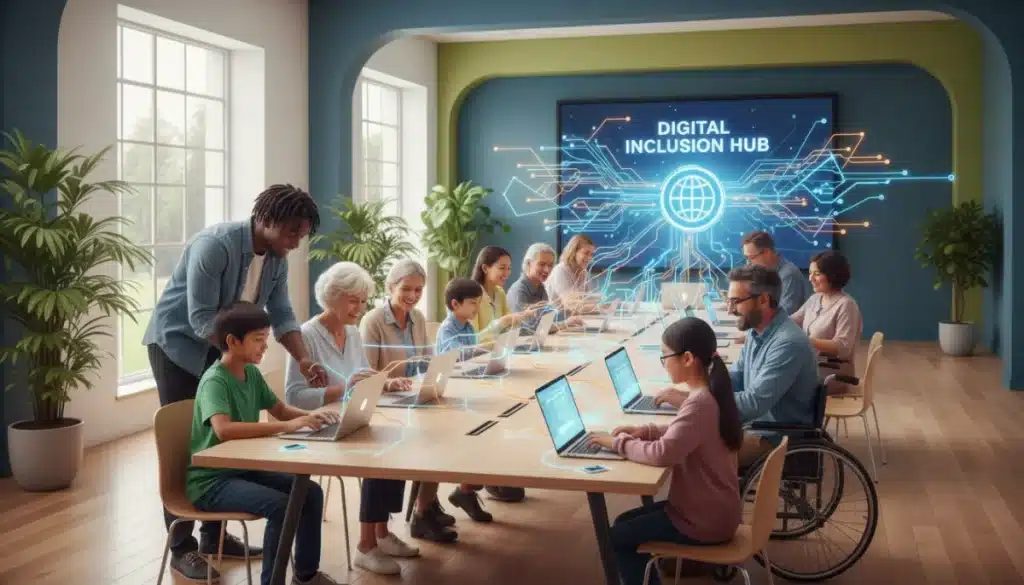
Establishing and supporting community-based digital education hubs can provide localized access to training and resources. These hubs can offer workshops, one-on-one assistance, and access to computers and internet for those who lack them at home.
Libraries, senior centers, and community organizations are ideal locations for these hubs, often serving as trusted institutions within their neighborhoods. Their role is pivotal in bridging the digital skills gap.
Curricula should be tailored to the specific needs of the community, ranging from basic internet navigation to more advanced job-seeking and coding skills. This adaptability ensures relevance and engagement.
- Free or low-cost digital literacy workshops.
- Access to public computers and high-speed internet.
- Trained instructors and peer-to-peer learning opportunities.
- Multilingual resources to serve diverse populations.
Integrating Digital Skills into Education Systems
For younger generations, integrating digital skills into K-12 and higher education curricula is essential to prepare them for the future workforce and civic life. This goes beyond basic computer classes to encompass critical thinking, digital citizenship, and computational thinking.
Schools must be equipped with adequate technology and well-trained educators to deliver effective digital education. The pandemic highlighted existing disparities in remote learning capabilities, emphasizing the need for robust digital infrastructure in all educational settings.
Ensuring equitable access to devices and connectivity for students, both in school and at home, is a critical step. This minimizes the risk of a new generation falling behind due to lack of digital fluency.
Promoting Accessible Technology and Devices
Even with broadband and digital literacy, the cost and availability of devices can be a significant barrier to equitable tech access. Many families cannot afford computers, tablets, or smartphones, which are increasingly essential for daily life.
Programs that provide refurbished devices, offer subsidies for new hardware, or facilitate device lending through community organizations are vital. These initiatives directly address the hardware component of the digital divide.
Furthermore, ensuring accessibility features are standard on all devices is critical for individuals with disabilities. Universal design principles should guide technology development to promote true inclusion.
Device Distribution and Recycling Programs
Establishing robust device distribution and recycling programs can help put essential technology into the hands of those who need it most. Partnerships with corporations, schools, and local governments can create a sustainable pipeline for devices.
Non-profit organizations often play a key role in collecting, refurbishing, and distributing devices to low-income individuals and families. These efforts are a practical way to promote equitable tech access.
- Community-led device donation drives.
- Government grants for device purchase and distribution.
- Partnerships with tech companies for device donations.
- Refurbishment centers providing job training opportunities.
Accessibility Standards and Inclusive Design
Beyond affordability, technology must be designed to be accessible to everyone, including individuals with disabilities. Adhering to accessibility standards and promoting inclusive design principles are non-negotiable for equitable tech access.
This includes features like screen readers, voice control, adjustable font sizes, and alternative input methods. Developers and manufacturers have a responsibility to ensure their products are usable by the widest possible audience.
Regular audits and user testing with diverse populations are essential to identify and address accessibility barriers. True equitable tech access means technology that works for all users, regardless of ability.
Fostering Public-Private Partnerships and Funding
Addressing the digital divide effectively requires a multi-faceted approach that leverages the strengths of both public and private sectors. Public-private partnerships are essential for pooling resources, expertise, and innovation to achieve widespread equitable tech access.
Government funding and regulatory support can incentivize private companies to invest in underserved areas and develop affordable solutions. Conversely, private sector innovation can drive down costs and enhance the quality of digital services.
These collaborations can extend beyond infrastructure to include digital literacy programs, device provision, and the development of accessible digital content. A concerted effort is needed to achieve meaningful progress.
Innovative Funding Models for Digital Inclusion
Traditional funding models alone may not be sufficient to close the digital divide entirely. Exploring innovative financing mechanisms, such as social impact bonds, philanthropic investments, and community broadband initiatives, can provide additional resources.
These models can attract diverse stakeholders and encourage sustainable investment in digital inclusion projects. The focus should be on long-term solutions rather than short-term fixes for equitable tech access.
Transparent reporting and accountability are crucial for all funding initiatives to ensure resources are used effectively and reach the intended beneficiaries. This builds trust and encourages continued investment.
- Federal grants and subsidies for broadband and digital equity.
- Local government investment in municipal broadband networks.
- Corporate social responsibility initiatives and tech company partnerships.
- Philanthropic contributions targeting digital inclusion.
Regulatory Frameworks Supporting Equity
Effective regulatory frameworks are necessary to ensure fair competition, protect consumers, and promote universal service. Policies that encourage infrastructure sharing, prevent digital redlining, and mandate affordable options are critical for equitable tech access.
Regulators must adapt to rapidly evolving technology and market conditions to ensure policies remain relevant and effective. This proactive approach is vital for sustaining progress in closing the digital divide.
Advocacy for policies that prioritize the needs of underserved communities is also essential. This ensures that the voices of those most affected by the digital divide are heard and integrated into policy decisions.
Developing Relevant and Localized Digital Content
Having access to technology is only truly beneficial if there is relevant and culturally appropriate content available for users. The digital divide is not just about connectivity and devices, but also about the utility and value of the digital experience for diverse communities.
This involves supporting the creation of local content, providing information in multiple languages, and developing digital services that address specific community needs in areas like health, education, and economic development.
Engaging local communities in the content creation process ensures that digital resources are meaningful and impactful. This personalized approach enhances the value of equitable tech access.
Culturally Relevant Digital Resources
Digital content should reflect the cultural diversity and linguistic needs of the communities it serves. Providing resources in multiple languages and developing content that resonates with local customs and traditions can significantly increase engagement.
This includes educational materials, health information, and civic engagement tools that are easily understood and culturally sensitive. Such efforts are key to making equitable tech access truly inclusive.
Collaborating with community leaders and cultural organizations can help ensure content is appropriate and effectively reaches target audiences. This builds trust and relevance.
- Translation of essential government and health information.
- Development of educational apps and platforms in local languages.
- Support for local content creators and digital storytellers.
- Platforms for community news and information sharing.
Digital Services for Local Needs
Beyond general content, developing digital services tailored to specific local needs can significantly improve the quality of life in underserved communities. This could include telehealth platforms, online job boards, or digital tools for small businesses.
These services should be co-created with community input to ensure they address real challenges and provide practical solutions. This user-centric approach is vital for effective equitable tech access initiatives.
Ensuring these services are user-friendly and accessible to individuals with varying levels of digital literacy is also paramount. Simplicity and intuitive design can boost adoption and impact.
| Key Action | Brief Description |
|---|---|
| Broadband Expansion | Extend affordable, high-speed internet to underserved areas. |
| Digital Literacy | Implement comprehensive skills training for all demographics. |
| Device Accessibility | Provide affordable or free devices and promote inclusive design. |
| Community Content | Develop relevant, localized digital content and services. |
Frequently Asked Questions About Equitable Tech Access
The primary challenge remains multifaceted, encompassing not only the physical infrastructure for broadband but also the affordability of services and devices, and the widespread lack of digital literacy. Addressing these interconnected issues simultaneously is crucial for genuine progress in equitable tech access.
Public-private partnerships can accelerate progress by combining government funding and regulatory support with private sector innovation and efficiency. This collaboration can lead to faster infrastructure deployment, more affordable services, and broader reach for digital literacy programs, enhancing equitable tech access.
Community centers are vital hubs for digital inclusion, providing accessible internet, devices, and digital literacy training. They serve as trusted local points of contact, offering personalized support and fostering an environment where individuals can gain confidence and skills for equitable tech access.
Localized digital content is important because it ensures that technology is not just available, but also relevant and valuable to diverse communities. Content that reflects cultural nuances and addresses specific local needs fosters greater engagement and makes equitable tech access more impactful and meaningful for users.
Promoting equitable tech access leads to significant long-term benefits, including enhanced educational outcomes, increased economic opportunities, improved healthcare access, and stronger civic engagement. It fosters a more inclusive society where everyone has the chance to thrive in the digital age, reducing disparities and boosting national competitiveness.
Looking Ahead: Sustaining Equitable Digital Futures
The collective effort to ensure equitable tech access is not a one-time project but an ongoing commitment. The five actionable steps outlined provide a robust framework, but sustained vigilance and adaptability will be critical as technology continues to evolve.
Policy decisions, community engagement, and private sector innovation must remain aligned to prevent new forms of digital exclusion.
Monitoring progress, adapting strategies to emerging challenges, and celebrating successes will reinforce the importance of this social justice movement. The goal is to build a future where digital opportunity is a right, not a privilege, for every individual in the United States.
The journey towards universal equitable tech access is complex, but the societal benefits, from economic growth to improved public health, make it an imperative.
Continued investment and collaborative action will define our success in Actionable Steps for Promoting Equitable Access to Technology and beyond.