90-Day Anti-Bribery Audit: Cutting Third-Party Vendor Risk by 35%
Advertisements
Unvetted corporate supply chains and external contractors represent one of the largest regulatory liabilities for modern businesses. Implementing a rigorous 90-Day Anti-Bribery Audit allows risk officers to identify systemic corruption risks and slash third-party vendor exposure by 35%.
Evaluating supply chain intermediaries through targeted FCPA compliance reviews prevents severe regulatory penalties and reputational damage. Structured vendor screening, transparent transaction tracking, and enhanced due diligence frameworks isolate vulnerabilities before federal authorities issue compliance subpoenas.
Executing a structured quarterly risk assessment ensures continuous monitoring without disrupting core operational workflows. Here is how compliance executives are deploying targeted anti-corruption reviews to safeguard supply chain integrity and drastically reduce vendor liability.
The Imperative for a 90-Day Anti-Bribery Audit
The current regulatory climate demands swift and decisive action from organizations to address bribery and corruption risks, particularly those originating from third-party relationships. A 90-day Anti-Bribery Compliance Audit is not merely a recommendation but a strategic necessity for businesses operating in complex global markets.
This concentrated audit period forces companies to prioritize and streamline their compliance efforts, leveraging a focused approach to achieve measurable improvements rapidly. The urgency reflects a broader shift in enforcement, where regulatory bodies expect demonstrable progress rather than prolonged, incremental changes.
By compressing the audit timeline, organizations can quickly identify vulnerabilities, implement corrective actions, and thus significantly reduce their exposure to legal penalties and reputational damage. This accelerated process is crucial for maintaining integrity and trust among stakeholders.
Understanding Modern Enforcement Priorities
Modern anti-bribery enforcement priorities are characterized by a strong emphasis on individual accountability, robust compliance programs, and international cooperation. Regulators are increasingly scrutinizing the effectiveness of corporate compliance frameworks, particularly concerning third-party oversight.
There is a clear expectation that companies not only have policies in place but can also demonstrate their practical implementation and continuous monitoring. The focus has shifted from mere policy existence to the tangible impact and efficacy of these measures in preventing and detecting corruption.
Furthermore, enforcement actions frequently highlight the importance of data analytics, whistleblower protections, and timely self-disclosure in mitigating penalties. These priorities underscore the need for a comprehensive and dynamic approach to anti-bribery compliance.
Key Shifts in Regulatory Scrutiny
Increased focus on beneficial ownership and ultimate control of third parties.
Expectations for continuous monitoring and periodic re-evaluation of vendor risk profiles.
Emphasis on proactive remediation and corrective actions following identified deficiencies.
These shifts mean that a static, annual review is no longer sufficient. Companies must integrate real-time risk assessment and ongoing due diligence into their third-party management strategies to meet evolving regulatory demands effectively. The 90-Day Anti-Bribery Compliance Audit directly addresses these heightened expectations.
Structuring The 90-Day Anti-Bribery Compliance Audit
Executing a successful 90-day anti-bribery compliance audit requires a meticulously planned and executed strategy. The compressed timeline necessitates efficient resource allocation and a clear division of responsibilities to ensure all critical areas are covered comprehensively.
Initial steps involve defining the scope, identifying key stakeholders, and assembling a dedicated audit team with expertise in legal, financial, and operational compliance. This foundational phase is crucial for setting realistic objectives and establishing a clear roadmap for the subsequent weeks.
The audit must systematically cover due diligence processes, contract terms, payment mechanisms, and training programs related to third-party vendors. A phased approach allows for focused attention on different aspects of the compliance framework within the tight timeframe.
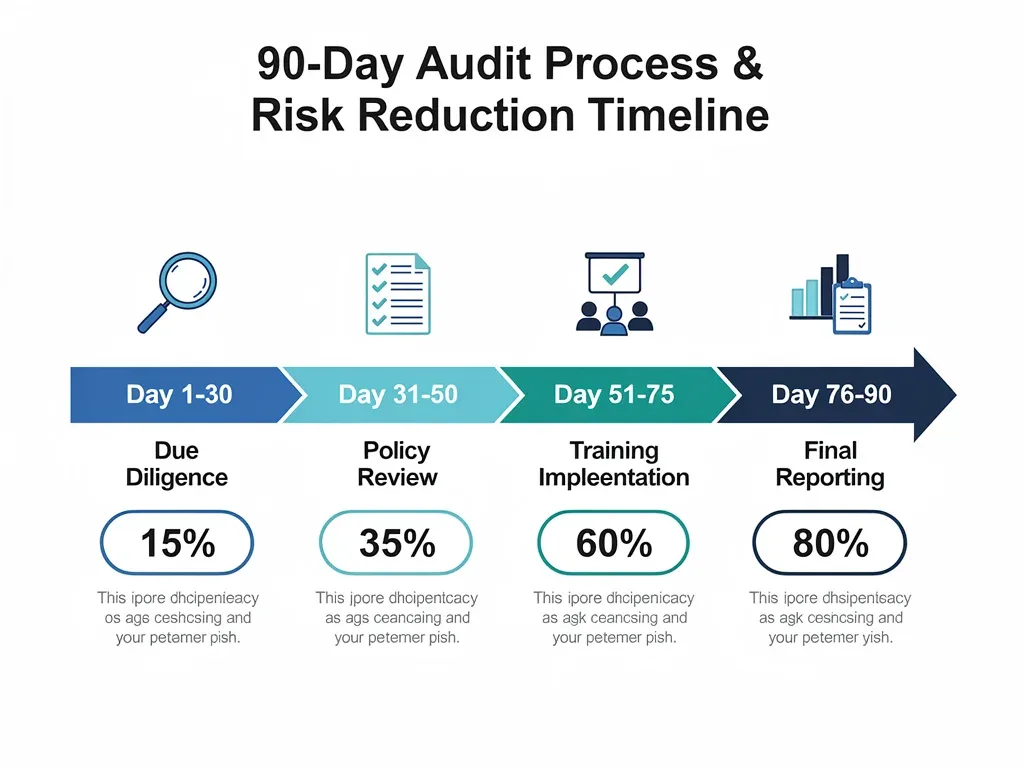
The second phase typically involves intensive data collection and analysis, including reviewing existing vendor contracts, transaction records, and communication logs. This deep dive aims to uncover any red flags or inconsistencies that might indicate potential bribery risks.
Simultaneously, conducting interviews with relevant personnel, both internal and external, provides qualitative insights into the practical application of anti-bribery policies. This human element is critical for understanding organizational culture and identifying potential gaps in training or awareness.
The final phase focuses on synthesizing findings, developing actionable recommendations, and presenting these to senior management for immediate implementation. The goal is not just to identify problems but to provide concrete solutions that can be enacted quickly.
Phased Approach to Rapid Compliance
Weeks 1-3: Scope definition, team formation, and initial risk assessment of high-priority vendors.
Weeks 4-7: Intensive data review, transactional analysis, and targeted interviews with key personnel.
Weeks 8-12: Findings synthesis, remediation plan development, and final report preparation and presentation.
This structured approach ensures that the 90-day anti-bribery audit remains on track and delivers tangible results within the stipulated timeframe. Regular progress meetings and clear communication are vital for success.
Cutting Third-Party Vendor Risk by 35%
Achieving a 35% reduction in third-party vendor risk within a 90-day anti-bribery compliance audit is an ambitious yet attainable target. This reduction stems from a combination of enhanced due diligence, robust contractual safeguards, and continuous monitoring mechanisms.
The audit identifies and addresses critical vulnerabilities, such as inadequate background checks on third parties, poorly defined contractual anti-bribery clauses, and insufficient oversight of vendor activities. By rectifying these deficiencies, companies can significantly lower their risk profile.
Furthermore, implementing targeted training programs for both internal staff and third-party vendors on anti-bribery policies fosters a culture of compliance that actively deters illicit practices. This proactive education is a cornerstone of effective risk mitigation.
A key component of this risk reduction is the re-evaluation and, if necessary, termination of relationships with high-risk vendors who fail to meet compliance standards. This decisive action sends a strong message about the company's commitment to ethical conduct.
The audit also emphasizes the importance of leveraging technology for ongoing monitoring, such as automated transaction screening and AI-powered risk assessment tools. These tools provide real-time insights, allowing for immediate intervention when anomalies are detected.
Ultimately, the 35% reduction is not just a numerical target but a reflection of a more resilient and ethically sound third-party ecosystem. It signifies a tangible improvement in the company's overall anti-bribery posture, enhancing its reputation and protecting its long-term interests.
Leveraging Technology for Enhanced Audit Efficiency
In the context of a 90-day anti-bribery compliance audit, technology plays an indispensable role in streamlining processes and enhancing the accuracy of risk assessments. Manual reviews are often too time-consuming and prone to human error to meet the demands of such a compressed timeline.
Automated due diligence platforms can rapidly screen potential and existing third-party vendors against global watchlists, sanctions lists, and adverse media. This significantly accelerates the identification of high-risk entities that warrant deeper investigation.
Furthermore, data analytics tools can analyze vast quantities of transactional data to detect unusual payment patterns, geographical anomalies, or inconsistencies that might signal corrupt activities. Such insights are crucial for focusing audit efforts where they are most needed.
Compliance management software centralizes documentation, tracks policy adherence, and manages training records, providing a single source of truth for all compliance-related activities. This digital infrastructure is vital for maintaining an organized and auditable trail.
Artificial intelligence and machine learning algorithms are increasingly being employed to predict potential risk areas based on historical data and emerging trends. These predictive capabilities allow companies to proactively address nascent threats before they escalate.
By integrating these technological solutions, organizations can conduct a more thorough and efficient 90-day anti-bribery compliance audit, maximizing their ability to identify and mitigate third-party vendor risks within the tight deadline. The strategic use of technology is a game-changer.
Integrating Audit Findings into Continuous Compliance
The findings from a 90-day anti-bribery compliance audit are not merely a snapshot in time; they form the foundation for an ongoing and dynamic compliance program. The insights gained must be integrated into the company's continuous risk management framework.
This integration involves updating policies and procedures based on identified gaps, enhancing training modules to address specific vulnerabilities, and refining due diligence processes for future vendor onboarding. The audit serves as a catalyst for systemic improvements.
Establishing a robust monitoring system post-audit is crucial to ensure that the implemented remediation measures remain effective and that new risks are promptly identified. Continuous monitoring tools and periodic reviews solidify the gains made during the intensive audit period.

Furthermore, fostering a culture of compliance that extends throughout the organization and to all third-party partners is essential for long-term success. This involves clear communication, ethical leadership, and consistent enforcement of anti-bribery standards.
Regular reporting to senior management and the board on the status of compliance efforts ensures ongoing oversight and resource allocation for risk mitigation. Transparency at all levels reinforces the commitment to ethical business practices.
By transforming the audit findings into actionable, continuous improvements, companies can move beyond a reactive compliance posture to a proactive and resilient one, significantly reducing their exposure to bribery risks over the long term. The 90-day anti-bribery audit is a starting point, not an endpoint.
Challenges and Best Practices in Implementation
Implementing a 90-day anti-bribery compliance audit, while highly effective, is not without its challenges. The compressed timeframe can strain internal resources, requiring significant commitment and coordination across various departments.
One primary challenge lies in obtaining complete and accurate data from third-party vendors, who may operate in different jurisdictions with varying regulatory landscapes and data privacy concerns. Effective communication and clear expectations are vital to overcome this.
Another hurdle is ensuring consistent application of compliance standards across a diverse global vendor network. Tailoring due diligence and training to local contexts while maintaining a unified corporate standard requires careful planning and cultural sensitivity.
Overcoming Implementation Hurdles
Dedicated Resources: Allocate a specialized team and sufficient budget to avoid delays and ensure thoroughness.
Clear Communication: Establish transparent channels with third parties, clearly outlining audit expectations and requirements.
Phased Rollout: Prioritize high-risk vendors for immediate audit, then expand to others as resources allow.
Best practices include leveraging technology for automation, conducting regular internal training refreshers, and engaging external experts for specialized legal or forensic support. These strategies help mitigate common pitfalls and enhance audit efficacy.
Moreover, establishing a clear escalation path for identified risks and ensuring prompt remediation are critical. A responsive system for addressing non-compliance reinforces the seriousness of the audit and the company's commitment to ethical conduct.
By anticipating these challenges and adopting proven best practices, organizations can maximize the impact of their 90-day anti-bribery compliance audit, achieving significant risk reduction and strengthening their overall compliance posture. Proactive planning is key.
The Future of Anti-Bribery Compliance and Vendor Risk
The landscape of anti-bribery compliance and third-party vendor risk management is continuously evolving, driven by new technologies, geopolitical shifts, and increasingly stringent regulatory demands. The 90-day anti-bribery compliance audit represents a significant step in this evolution.
Looking ahead, we can anticipate a greater emphasis on predictive analytics and artificial intelligence to identify emerging risks before they materialize. This will enable companies to move from reactive compliance to proactive risk prevention, further strengthening their defenses.
There will also be continued pressure for greater transparency in supply chains and vendor networks, pushing companies to understand not just their direct partners but also sub-contractors and other indirect relationships. This expanded scope will necessitate more sophisticated due diligence tools.
The role of ESG (Environmental, Social, and Governance) factors will become even more intertwined with anti-bribery compliance, as investors and stakeholders demand ethical conduct across all aspects of business operations. A holistic approach to risk will be paramount.
International cooperation among enforcement agencies is expected to intensify, leading to more coordinated investigations and prosecutions of bribery schemes involving multiple jurisdictions. This global collaboration underscores the need for universally robust compliance programs.
Ultimately, the future points towards an integrated, technology-driven, and continuously adapting compliance framework that treats third-party vendor risk as a core strategic imperative. The 90-day anti-bribery compliance audit sets a new benchmark for achieving this.
Key Aspect | Brief Description |
|---|---|
Audit Goal | Reduce third-party vendor bribery risk by 35% in 90 days. |
Key Focus | Modern enforcement priorities and robust compliance programs. |
Methodology | Phased approach, intensive data review, and technology integration. |
Long-Term Impact | Enhanced ethical standing and continuous risk management. |
Frequently Asked Questions About Anti-Bribery Compliance Audits
What is the primary objective of a 90-Day Anti-Bribery Compliance Audit?▼
The main goal of the 90-Day Anti-Bribery Compliance Audit is to significantly reduce third-party vendor risk, aiming for a 35% cut under current enforcement priorities. It focuses on swiftly identifying and mitigating bribery and corruption vulnerabilities within an organization's vendor ecosystem to ensure ethical operations.
Why is a 90-day timeline considered effective for this type of audit?▼
A 90-day timeline provides a concentrated and urgent framework, compelling organizations to prioritize compliance efforts and achieve rapid, measurable improvements. This compressed period facilitates quick identification of issues and immediate implementation of corrective actions, aligning with modern regulatory expectations for swift remediation.
How do modern enforcement priorities influence these compliance audits?▼
Modern enforcement priorities emphasize individual accountability, robust compliance programs, and transparent third-party oversight. Regulators expect demonstrable effectiveness, not just policy existence, pushing companies to implement proactive measures, leverage data analytics, and ensure continuous monitoring to prevent and detect bribery.
What role does technology play in a 90-Day Anti-Bribery Compliance Audit?▼
Technology is crucial for efficiency and accuracy. Automated due diligence platforms, data analytics tools, and compliance management software streamline processes, rapidly identify high-risk areas, and provide real-time insights. AI and machine learning also help predict risks, enabling proactive measures within the tight 90-day schedule.
What happens after the 90-day audit period concludes?▼
Upon completion, audit findings are integrated into a continuous compliance program. This involves updating policies, enhancing training, and refining due diligence for future vendor onboarding. Establishing ongoing monitoring systems and regular reporting ensures that the improvements are sustained, fostering a long-term culture of ethical conduct.
Impact and Implications
The implementation of The 90-Day Anti-Bribery Compliance Audit signifies a pivotal shift in corporate responsibility and risk management.
This initiative not only addresses immediate vulnerabilities but also sets a new standard for proactive compliance, influencing how companies approach their global operations and vendor relationships.
Its success will likely drive further adoption of rapid-response audit frameworks, reshaping industry best practices and fostering a more ethical business environment globally.